






 KATTDO Review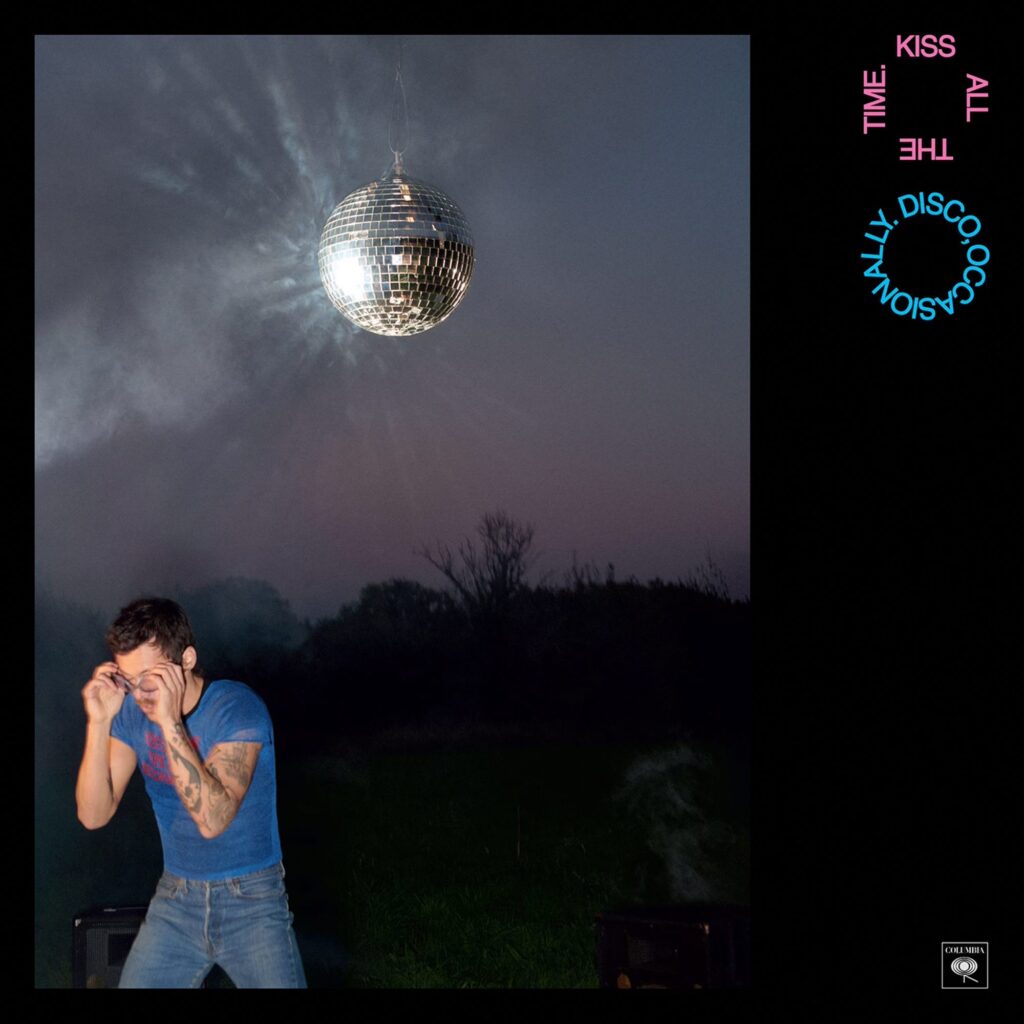
Kiss All the Time. Disco Occasionally – Review
Words by Ella Barrett
The first thing I said when listening to the shimmering, heart-bruised disco daydream, Kiss All the Time, Disco Occasionally, was: how is this making me so nostalgic when it’s the first time I’m hearing it?
There are albums you listen to, and then there are albums that seem to lean over, take your hand, and pull you barefoot into the velvet-lit afterparty of your own feelings. This is firmly the latter, and it almost feels as though Harry Styles is experiencing this moment alongside the listener with equal parts nostalgia, growth, and emotional afterglow, evoking a sense of familiarity with every note.
After multiple listens, I realised that the palpable, honey-sweet sense of nostalgia comes from an amalgamation of things — most notably the influence of the late seventies and early eighties, which seeps through the album like sunbeams in its synths, soft-rock textures, and layered electronics. Each track feels lived in, like a memory from an era neither I nor Harry lived through, yet somehow both recognise.
The album drifts in on a balmy breeze of both tangible late afternoon sun and glitter-clad moonlight cast in the early hours of the morning — flirtatious and warm without being shallow, tender without collapsing into gushiness. One moment, he is all hypnotic spiel and disco swagger; the next, he’s emotionally barefoot and existential in a kitchen at 2 a.m., asking questions no one can answer before sunrise.
There’s a delicious contradiction at its core: it wants to dance and yearn simultaneously — and somehow, it succeeds. The grooves are warm and satin-slick, but beneath them runs a quiet current of sentimentality. It’s music for slow-spinning under candlelight, for bonding with strangers in nightclub bathrooms, for remembering the exact colour of a night you swore you’d forget, for being unable to distinguish the difference between ‘tears and sweat’ as you immerse yourself in a state of euphoria.
Certain songs embody this especially vividly. American Girls, for instance, makes me ache for summertime — not just any summer, but a hazy, cinematic, saccharine Californian one. It brings me back to being 19 in Los Angeles, a fleeting experience that now feels strangely more tangible than some of the many summers I spent growing up between London and Cheshire. It creates a longing not just for a place, but for a hypothetical recreation of a sun-bleached memory.
Meanwhile, Coming Up Roses adopts a waltz-like structure evoking the feeling of watching an early twentieth-century Disney film. The orchestral arrangement feels almost fairytale-like, beautifully juxtaposed with lyrics that trace the awkward vulnerability of an insecure lover fumbling over their words. Some tracks took time to fully unfold for me. Not because I disliked them, but because they demanded patience — multiple listens to understand and appreciate their layered construction. Hearing several of them performed live in Manchester just hours after their release only deepened this connection, anchoring them to palpable, immediate memories. It’s a rare experience: usually, I sit with music long before hearing it live, but here, the two became intertwined almost instantly.
Vocally, Harry sounds less like he’s performing and more like he’s confiding. His voice retains its familiar warmth, but there’s something looser here — more instinctive, slightly more tactile. As though he’s realised that heartbreak doesn’t have to be quiet; it can shimmer, it can dance, it can wear sequins.
Lyrically, the album plays with images that feel effortless yet intentional: kisses as currency, dance floors as confessionals, desire as something both ridiculous and sacred. There’s a knowingness throughout — an understanding of the absurd theatre of love, and a decision to make it beautiful anyway, taking experiences and growing from them.
I’ll admit I didn’t go into this era entirely open-minded. I carried a kind of pre-emptive nostalgia for Harry’s earlier work — songs like Meet Me in the Hallway, Fine Line, and Keep Driving — and found myself subconsciously searching for echoes of them. I’d also let outside noise shape my expectations, imagining an album dominated by heavy techno influences based on fragments of information and second-hand opinions. That assumption couldn’t have been more wrong.
Loving this album has made me realise that my resistance to change often limits my ability to experience something fully. I was looking for a continuation of what I already loved, rather than allowing something new to unfold. And yet, the emotional core I was searching for — the reassurance, the introspection, the quiet power — is still here. It simply exists in a different, more expansive form, even within the more upbeat tracks like Carla’s Song. In that sense, the album becomes something larger than itself. It’s not just a collection of songs, but a quiet lesson in letting go — in accepting that the things we love don’t need to be replicated or outdone to remain meaningful. They already exist, unchanged, in memory. And perhaps part of their beauty lies in the fact that nothing else can quite compare.
My personal favourite, Carla’s Song, feels like something you’d discover pressed inside an old book—slightly faded, a little mysterious, and humming with a story it never fully explains. Harry’s voice doesn’t so much perform the song as wander through it. There’s a delicate push-and-pull between nostalgia and restraint—as if he’s holding back just enough to keep the magic intact. The song never insists on clarity, which is precisely its charm. It trusts you to fill in the blanks with your own experiences. Soft guitar lines curl around gentle percussion, and there’s a dreamy, almost pictorial quality that makes everything feel slightly suspended in time. It’s the kind of track that doesn’t demand attention but rewards it—best listened to when you’re staring out of a train window or lying awake at an unreasonable hour.
Kiss All the Time, Disco Occasionally doesn’t ask to be dissected under fluorescent light. It wants candlelight. The shards of phosphorescence project off a disco ball.Navy blue velvet. A slightly smudged reflection in a smoke-stained mirror at the end of the night. It is silly in the way love is silly, glamorous in the way loneliness sometimes is, and romantic enough to make cynicism feel terribly underdressed.
In the end, it feels less like an album and more like a small, rose-perfumed universe — one where every kiss is a tiny apocalypse, every beat an invitation to let go, and every goodbye arrives wearing platform boots and a large amount of jewellery.
Photography by Jones Crow