






 Introducing Eden Hunter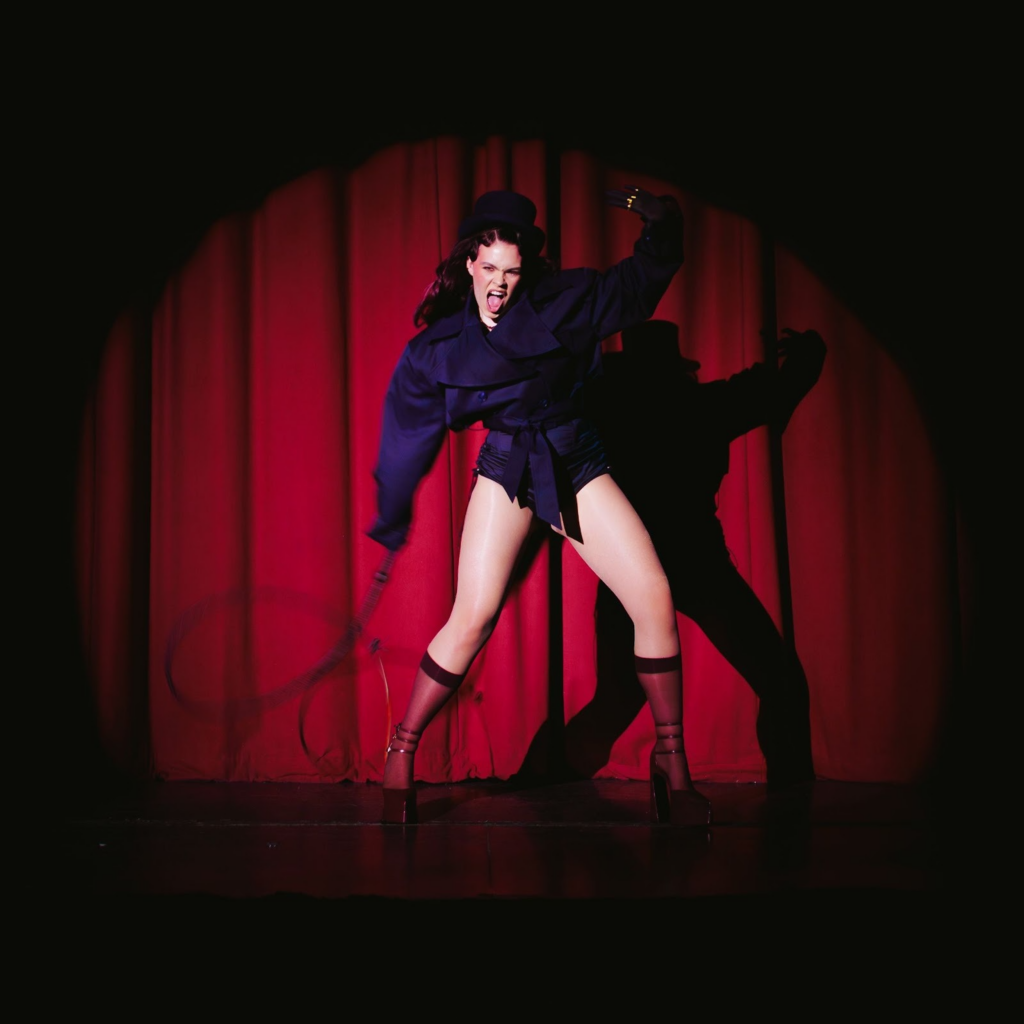
Inside The Circus Man: Pop, Performance, and the Price of Being “Too Much”
An interview with the showgirl rewriting her story—one song at a time.
words by Aryaki Alomyan
There are pop artists, and then there are performers—the kind who don’t simply step onto a stage, but build a world around them. With a sound that feels equal parts glittering pop spectacle and emotional theatre, Eden Hunter behind The Circus Man is crafting something far bigger than a collection of tracks. It’s a personal mythology. A confession. A comeback.
Her music doesn’t just ask to be heard, it demands to be seen. And at the centre of it all is a powerful tension: the beauty of being an artist, and the bruises that can come with it.
Because behind every spotlight is a shadow. And behind every showgirl smile, there’s often a story no one clapped for.
The Album as Survival Story
While The Circus Man feels like an immersive pop production—big hooks, theatrical drama, glittering intensity—it was never created simply for entertainment. It was born from reflection, from experience, and from a need to reclaim parts of herself that had been shaped by the industry.
“There wasn’t really a lightbulb moment,” she admits. “It was more a time when I felt like I needed to write about it from a personal growth standpoint.”
Like many artists, she found it difficult to process trauma in real time. The clarity came later—after the emotional fog lifted and the memories began to arrange themselves into meaning.
“After I had processed that period of time in my life and career, there were a lot of details that I needed to write about through my music… moments that shaped my identity and who I am today.”
And while the themes are deeply personal, she’s quick to point out something bittersweet: this darker side of artistry is not unique.
“The darker side of being an artist is not an uncommon narrative,” she says, crediting the women in pop who came before her. “I majorly thank the pop girls who sang about their industry trauma before me for opening up the space to call it out and find your own justice!”
In other words, The Circus Man isn’t just storytelling. It’s a form of reckoning.
Born to Perform
There’s something unmistakably cinematic about her music—each track feels staged, choreographed, lit from above. It’s pop, yes, but with a sense of drama that feels almost musical-theatre coded. That flair wasn’t manufactured in a studio. It was built in childhood.
“I have always been a showgirl!” she says, like it’s the simplest fact in the world.
Her earliest performances weren’t in venues or Pride stages, but in family living rooms, surrounded by music-loving grandparents who helped turn imagination into spectacle.
“I spent a lot of time with my grandparents who LOVE music and theatre and they would help me create this show to perform to the whole family with costumes and props.”
Even then, she didn’t treat performance like a game. It was serious. Sacred.
“It always felt really serious to me, like a responsibility to entertain the people!”
And perhaps that’s the key to her artistry now: she doesn’t simply perform for applause—she performs to be understood.
“I always felt more understood when there was an extension of my emotions through… costumes, lyrics, wigs, choreography.”
In her mind, drama wasn’t exaggeration. It was translation.
“I would take my final bow in the middle of my Nan’s living room and the whole family would stand up and applaud,” she remembers. “I felt celebrated and heard.”
That craving—to be seen fully, loudly, unapologetically—still fuels everything she creates.
When Pain Becomes Lyrics
For an artist whose work is so emotionally direct, the obvious question is: how does she decide what’s ready to turn into music?
“It is hard to know when you are ‘ready’ to write about something,” she says honestly. “I definitely struggle to write about something in the moment when it’s happening.”
Because fresh emotions are too large, too messy, too overwhelming to turn into something specific. They don’t yet have shape.
“When you are sitting freshly with an emotion… it is this big overarching theme and you can’t identify the details.”
For her, songwriting is about timing. About distance. About allowing the experience to settle before she picks it apart.
“You just cannot force it,” she says. “But being in the right room at the right time, with the right people—you will feel ready.”
And when she’s ready, she doesn’t hold back.
“Freaky Little Freak” and the Power of Being Too Much
One of her standout tracks, “Freaky Little Freak,” doesn’t just celebrate individuality—it weaponises it. It’s a glitter-bomb of self-acceptance, built for anyone who has ever been told to quiet down, tone it down, shrink themselves into something more digestible.
But that message came from a very real wound.
“In all honesty, I have always struggled to be anything but myself,” she says. “Because who I am exists so intensely within me.”
Still, even the most self-aware artists can be manipulated—especially early in their careers, when gatekeepers hold the illusion of power.
“There was a time when I was working with some managers who really got in my head about how I was presenting and how that was being perceived.”
She describes it like watching herself disappear in real time. Her early work was unapologetically theatrical—camp, bold, wigged-up. And then suddenly, everything shifted.
“You can literally see it throughout my releases,” she explains. “I was all camp, wigged up, artful and theatrical—then it was a full 180.”
The industry demanded something else: less weird, less colourful, less her.
“I was in the countryside all natural performing a music video concept I didn’t come up with because it would look more ‘mature and sexy’.”
It’s the kind of moment many artists experience but rarely admit: when your brand becomes someone else’s experiment. When you’re told your authenticity is a liability.
“It makes me really sad when I think about it,” she says.
But she also recognises what it gave her: a hard-earned lesson that no amount of control from outsiders can erase the truth of who you are.
“No matter how much power someone has over you… you are simply gonna be undoing a lot of that time in therapy and re finding where you began.”
And Freaky Little Freak feels like that return. Not just a song, but a declaration.
Writing for Others vs Writing for Herself
Beyond her solo work, she’s also made her mark as a songwriter and co-producer, including major projects like RuPaul’s Drag Race UK—a cultural phenomenon built on charisma, uniqueness, nerve and talent.
For her, writing for others is thrilling, because it means stepping into someone else’s universe.
“I LOVE writing for other artists and projects especially when they exist completely in their own world,” she says. “It’s always a huge privilege to be let in.”
But it comes with responsibility.
“When writing for others I have a responsibility to make that person feel like they can say whatever they want to… and be able to shape that into something that works for them.”
The difference, she says, is vulnerability. When she writes for herself, there’s no shield.
“I am the artist so I need to be comfortable enough to be vulnerable.”
That process requires trust—and the right collaborators.
She highlights writer and producer Kaity Rae as someone who creates safety in the studio.
“She steps into that role of making sure she’s asking me the right questions and pushing me… in the most nurturing way.”
And perhaps most tellingly, she admits that the hardest part isn’t creating—it’s being kind to herself while doing it.
“I am really practicing being a better, kinder writer to myself,” she says. “It’s hard though!!”
The Aesthetic: Character, Costume, and Truth
Her visuals are striking: dramatic, cinematic, character-driven. But is it a persona—or is it simply her, turned up to full volume?
“I guess it is bits of both,” she says thoughtfully. “I am very theatrical and characterful so I am never playing a particular role… but yes, amplifying parts of my real identity would be the perfect way to describe it.”
She doesn’t use performance to hide. She uses it to reveal.
“I love going all in—really getting ugly and raw with it,” she says. “It makes me come alive.”
That willingness to be both glamorous and unfiltered is what makes her work feel so alive: it’s not about polish. It’s about impact.
Built for the Stage
Her music is made for live audiences—designed to echo through Pride crowds and packed venues. And she’s already proven she can command both, having performed at major events like London Pride and delivered sold-out headline shows.
But for her, performance isn’t the final stage of the creative process—it’s the beginning.
“When creating the music I am always thinking of the live show,” she says.
Even in the earliest writing sessions, she imagines the moment it will be felt in a room full of people.
“Whether it’s the hugest most dramatic synth… or the most delicate piano part that requires complete silence to be heard, when writing it I have 1000% considered the show of it all.”
For her, music isn’t complete until it becomes an experience.
“I want my performances to be a full experience in whatever capacity,” she says. “And that has to start at the very beginning of whatever you are creating.”
Power, Pressure, and the Emerging Artist Trap
Much of The Circus Man explores power dynamics—who gets control, who gets silenced, who gets shaped into something marketable. When asked what she wants to see change for emerging artists, her answer is immediate: almost everything.
“Eeek, so many,” she says.
She points out that while accessibility has opened doors, it has also created a new kind of pressure: artists are expected to do everything alone, for free, while also performing success online.
“We are at a really tricky time where the music industry is so accessible which is an absolute blessing but equally an absolute curse.”
And the term “emerging artist” doesn’t always mean struggling—it can also mean signed, supported, and still financially vulnerable.
“Emerging artists… is a really broad term,” she explains. “Either way I think the financial vulnerability is relevant to both and is super scary.”
But what frustrates her most is how the industry now shifts responsibility onto social media rather than professional development.
“A lot of pressure is put on emerging artists to break through via social media rather than people in the industry being qualified enough at their jobs to help the right artists break.”
Her point is blunt and true: the industry cannot exist without artists, and yet artists are treated as disposable.
“Without the artists, there is no industry,” she says. “So more consideration for the vulnerability that an emerging artist is in when trying to build their career.”
What Comes Next: No Limits, No Apologies
If The Circus Man is her statement piece, her next chapter seems destined to be even bigger. She speaks about the future with the kind of ambition that doesn’t ask permission.
“There are absolutely no limits on what I want to achieve as an artist,” she says. “I am absolutely going for it all… I have a lot to say!!”
Music will remain central, but she’s also dreaming beyond it—toward acting, storytelling, and screen.
“I definitely have dreams of continuing to build my acting career.”
And then she drops the kind of line that feels like a prophecy disguised as a joke—except she means it.
“My heart is currently set on being seen for the role of ‘Celia St James’ in the screen adaptation of The Seven Husbands of Evelyn Hugo,” she says. “You heard it here first… manifest for me please!!”
It’s bold. It’s specific. It’s theatrical. And it’s completely on brand.
“But certainly there are no limits to where I am going to push myself to next,” she adds. “I’m a theatre kid through and through so watch this space!”
The Showgirl Isn’t Going Anywhere
In an era where pop can feel increasingly algorithmic—flattened for playlists and palatable branding—The Circus Man stands out because it’s messy, vivid, and human. It’s the sound of someone reclaiming their identity with glitter on their hands and truth in their throat.
She isn’t afraid to be too much. In fact, that’s the point.
Because the circus isn’t just spectacle.
It’s survival.
And she’s finally the one holding the spotlight.
photo by Ben Warburton