





 Exclusive: Interview with Maya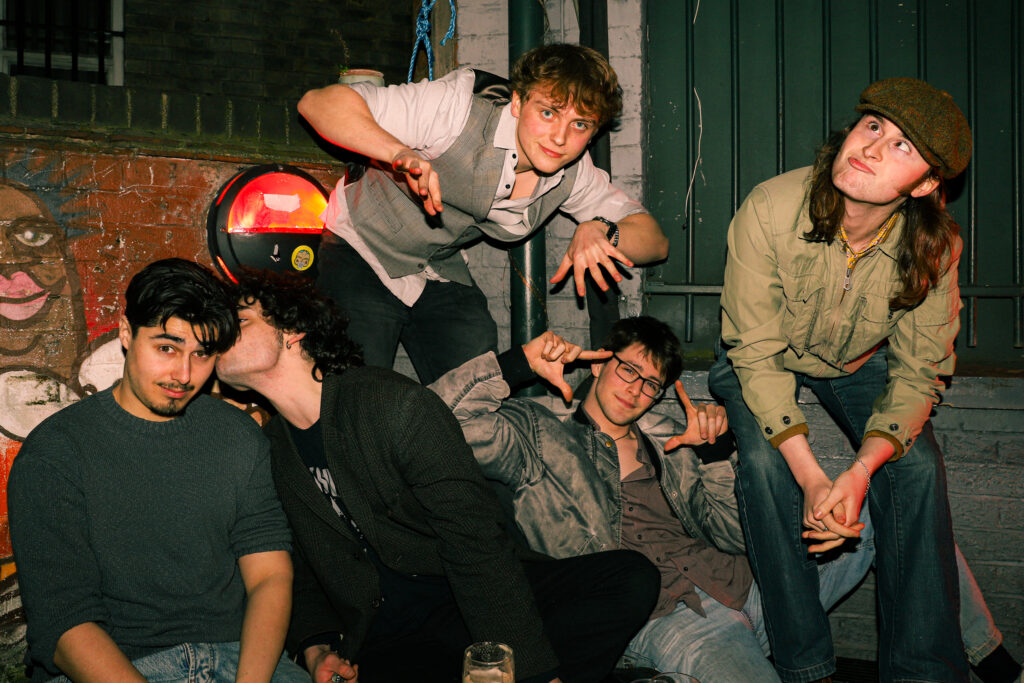
In conversation with Maya
“Maya Likes to Run Her Mouth… and Has Plenty to Say: In Conversation with Maya”
Words by Chiara Rosati C.
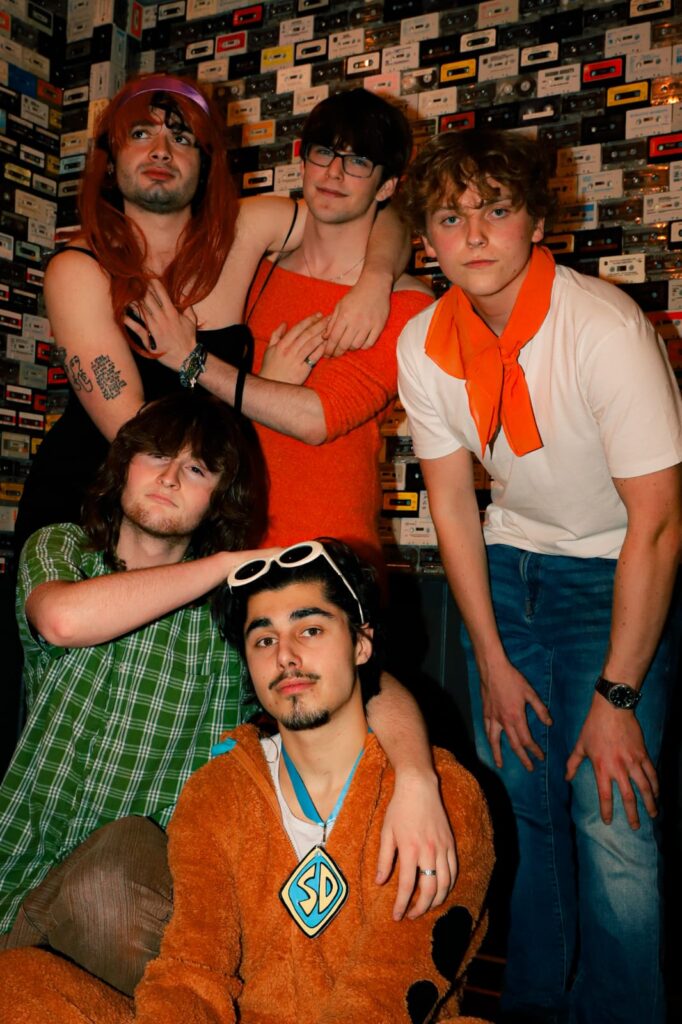
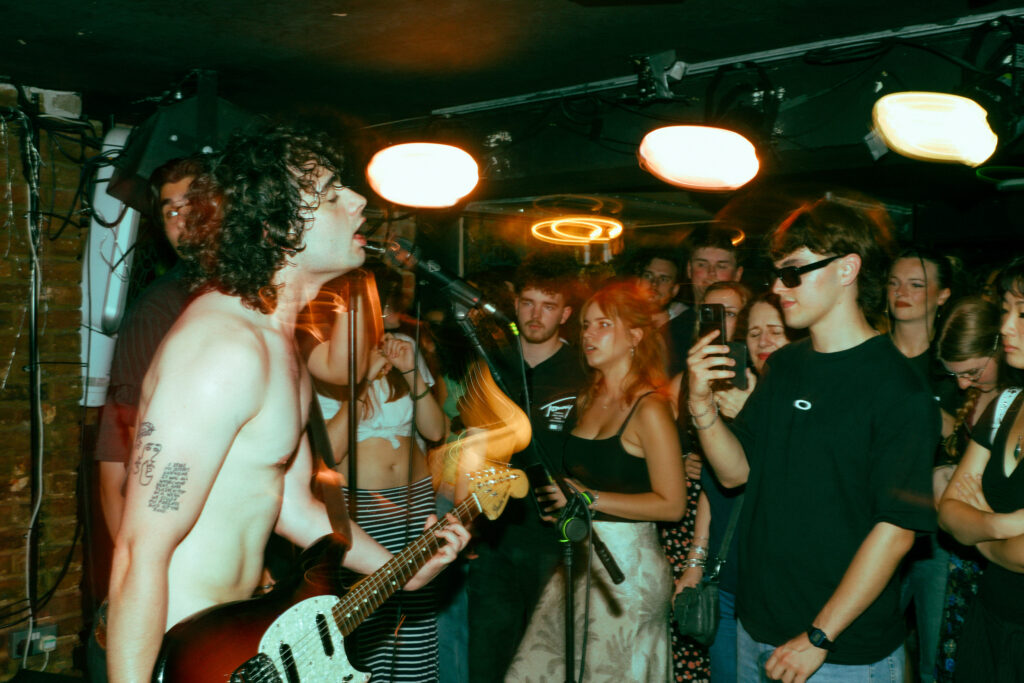
Led by frontman and singer Callum Kennedy, with Hugh Munro on guitar and vocals, Alex Portat on lead guitar, Jack Holloway on bass, and Fin Corkhill on drums, Maya is a Kingston-born band built as much on chaos and dark humour as on discipline and intent. Having already played at The Windmill in Brixton three times—a rite of passage for up-and-coming rock bands—they have undeniably established themselves as a formidable live act. In this interview, Callum and Hugh talk candidly about starting a band with little formal experience, learning how to trust each other creatively, and turning dark feelings into loud, communal release. From drunken writing sessions and ruthless internal filters to sold-out gigs, DIY videos, and ambitions that stretch far beyond their hometown, the boys unpack what it means to grow into a band driven by instinct and persistence, building a sound defined by emotional rawness and high-energy live performances.
How did you and the other members of Maya meet, and when did you start the band?
Hugh: We’ve only been this band, with these five people, for a year or so.
Callum: We started having the songs and looking to be in a band around October 2023, which is when Hugh and I met. A friend and I had started writing music, and he knew Hugh from a lockdown project.
Hugh: We both sing, but out of the four songs we’ve got released, I am singing only one of them lead. Most of our songs are Callum singing lead, and me shouting very loud backing vocals. My main thing is playing guitar.
Callum: Once we met, we got four songs together, picked a day to do a gig, and then just tried to find other lads that were out for it.
Hugh: We had no experience in real bands. I mean, I’d had projects, I had been writing music for nine years, but I’d never played on stage before.
Callum: I had never done anything musical at all, except for choir growing up. I just sort of woke up one day and was like, “I want to do a band. If I start one, then they can’t get rid of me”. I can barely play an instrument, and I failed music just before GCSEs. I think my background is just that I’m a fan of the culture, a fan of the history.
Hugh: He’s a very good conduit for what we want to convey. If I write some lyrics that are really over the top, he will be able to just condense what I mean into a way that makes sense. Basically, his role in the band is to just run into the crowd and be a crazy frontman.
Callum: Yeah, haha. I lost my voice entirely during COVID. I had to pick up literally the most basic guitar to try and tune myself again because when we started, I was tone-deaf.
Hugh: You just had a notebook full of raps and poems, and I was completely fucking useless at playing guitar. Our first gig was the worst thing in the world, even though we had good songs. I had made a demo EP and sent it to some people whom I wanted to work with. Orlando, who used to be the other guitarist in Maya, responded and said, “I’m also starting something, this is what we have”. I actually thought it was terrible, but it also had so much potential. He sadly had to leave us, but he was essential to us starting the band.
Callum: I knew our drummer, Fin, from school, but we weren’t really friends. We sort of thought we were weirdos to each other, but I knew he was a good drummer. One day, we invited him down, and he’s been with us ever since.
Hugh: Everyone else in the band we met because they wanted to join us. At some point, I remember I wanted to quit. We were playing gigs, but at the time, we had never really played a really great sold-out show. Then, Fin found two very good musicians, Jack and Alex, and we played one gig with one practice, and it was sold out completely. This is the current Maya line-up.
Callum: I think a lot of how the songs come about is just that everyone is wildly different in terms of favourite genres.
How do you make your style cohesive, then?
Hugh: I think it’s just because we all want to be in this band, and we enjoy it.
Callum: When it comes to our songs, someone is always leading with their vision, and everyone else just does their own part. Although there’s a lot of fucking around to find out what truly works.
Hugh: But I think that the bigger thing is that we have an insane filter on it in terms of what we actually allow to become a song. Everyone knows that.
What’s the filter?
Hugh: Most songs that get suggested into the band get fucking destroyed immediately. Sometimes we’re quite mean to each other. If the song is good, I’ll at least do a whole new demo of it. If I write something Callum doesn’t like, he’ll say something like, “Fuck no, you can’t make me say that”.
So, you both write lyrics?
Hugh: Everyone collaborates, really. It’s always two people working on something together, and then bringing it to the rest of the band to finalise it all together. Most of the time, I am heavily involved. “Alessa Moore”, our newest single, was mostly written by Callum. We wrote the second verse together, and I wrote the chorus and some other bits.
I was wondering, just because in my band I have complete lyrical control and I’m really protective of it, does it ever feel weird to sing someone else’s words?
Hugh: In terms of Callum and me, what makes it work is that we both have a very dark sense of humour. It’s just very sarcastic and mean.
Callum: What I’ve always liked about how we’ve written is that we normally write a bulk of it and then don’t explain what we were thinking about until the other person has an idea of what that might be. We interpret lyrics in different ways, and both ways are valid.
Hugh: When we write together, it’s insane.
Callum: When we write together, we’re drunk.
Hugh: We’re not really party people, but we are alcoholics. If we’re not playing a gig, what we will do is we will sit at home and just fucking write and drink from like 2 p.m. every afternoon.
Callum: And our sarcasm is often just a way to try to make light of something that felt worse at the time. There’s some level of relief in that.
Hugh: A lot of our music is actually really sad, especially lyrically, and I think it’s impossible to be truly sad without being quite funny, otherwise it just feels performative. If you go through something really dark in life, the easiest and most relatable way to deal with it is to cry and laugh at yourself.
Callum: I also think that we’ve all been in similar situations and had similar feelings and states of mind, which informs our style. People can listen to our music, and then they can either understand what we mean or tell us what they think we mean.
Hugh: The stuff we released is probably our happiest, though.
You mentioned you have a lot of influences. Which ones defined Maya?
Hugh: When I started the band, I wanted to sound like Joy Division.
One of my favourite bands.
Hugh: But we definitely don’t sound like Joy Division, haha. We started off much more goth-y. Callum loves The Cure.
Another one of my favourite bands. You gotta show me some of your early stuff, haha.
Hugh: For me, in terms of what I do in the band and what I want to accomplish, I think I tend to go for a catchier and hookier version of whatever Bauhaus and Sonic Youth do.
Callum: Now, instead, well, Danny Jones from McFly, whom we met at the Greene King Untapped competition, which is also how we got featured on Rolling Stone UK, said that we sounded like Idles and The Hives. That was a pretty big compliment. We entered the competition last minute and didn’t really realise how big it was. The final judges were Danny Jones, Sam Ryder from Eurovision, the live events manager of Music Venue Trust (Rebecca Walker), and the head of Jack Daniels UK (Eduardo Toledo). They liked us a lot, especially because we’re very high-energy and eccentric.
And you were finalists! Congrats, guys! Whose career do you admire and respect the most?
Hugh: When I started, Fontaines D.C.
Adore them.
Hugh: I don’t necessarily love everything that they’ve ever released. “Dogrel” is still my favourite album. What I admire is the fact that they’ve been able to get big without getting too cringe. Radiohead, as well. I think it’s important to have a good modern reference point; otherwise, you’re going to get stuck in regurgitative routines. Viagra Boys is another huge influence for me in terms of a band I would want to emulate. We love everything they’ve released. And we love The Murder Capital.
How do you feel about the rise of social media as a medium to get yourself known as a band?
Hugh: I don’t think it’s that bad. You need social media because it’s part of what you use to promote your gigs. Our Instagram is a really great landing page.
Callum: Yeah, social media is a great tool, but you don’t want to perform online. Especially in terms of this genre, you want to get fucking seen in your element, live. Socials are only helpful to build your brand because you can promote what you want.
Hugh: Instead of waiting for a label to decide how you’re supposed to be or look, you can frame the band however you want to, if you want to put enough time and effort into it, which is fucking long and exhausting. It can be a form of DIY music marketing, so it is a useful tool. However, do you want to be seen as a band that brings a shit ton of people to gigs because they really want to come and see you and they like your music, or do you want to be a band that can just do online content and doesn’t even have gig photos to post? I’m not saying that that stuff is bad because I think that there is a place for that, as well, but if a band is too dependent on their online profile without having other transferable metrics or a real, in-person following, they get fucked, they actually fail. You will just be known as an online band and never be taken seriously.
Callum: I’d like a bigger online following, but I wouldn’t be in a band if I didn’t play live. It’s always been a rule. We play every three weeks, at least.
Was it hard for you to find the right kind of confidence and attitude to be on stage, especially at the beginning?
Hugh: For me, the feeling of nervousness when you go on stage and perform was fucking awful. I was shy as fuck when we first started playing. But the decision to go on stage always came from a feeling of, “Yeah, I deserve to be here”.
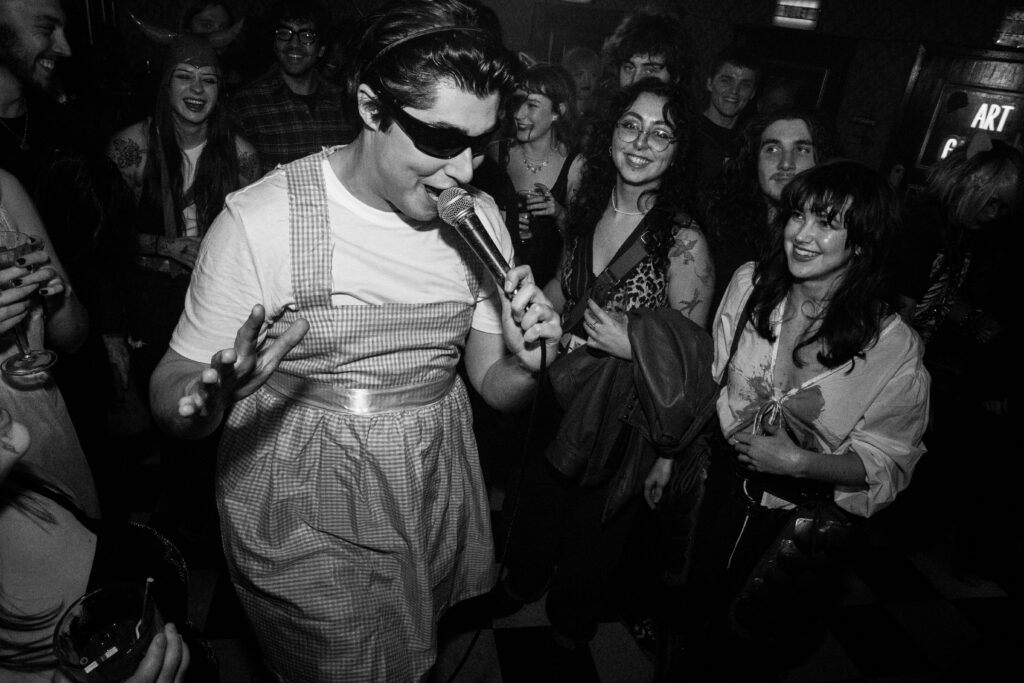
Callum: I hate the going to gigs and the buildup. I hate the being on stage, but I love that I’ve done it. I think I’ve never wanted to do anything other than perform. Although we’ve played about 50-something shows to this day, I still don’t like being on stage, but it’s a job, and it’s a character. You don’t write music without a feeling. Expressing that and getting people to see that is what I love.
I respect that. I often ask musicians if they tend to play some sort of character when they perform. Some really don’t; what you see on stage is who they are all the time, and then others need it to deal with the pressure of being on stage.
Hugh: With myself specifically, I don’t see any difference.
Callum: I think what you see on stage is an exaggerated version of me. It’s who I really want to be, how I feel on the inside, who I want to see myself as.
Hugh: But you’ve got Imposter Syndrome.
Callum: Yeah, that’s true, haha. I try to think of it as a privilege, you know, being on stage. So much of the job is to have fun and run around and be part of the crowd, for me, because I am essentially just a fan on stage.
Hugh: The song we released on Boxing Day, “Alessa Moore”, is always the song where everyone just screams the chorus back, and Callum goes into the crowd and starts jumping.
Callum: Yeah, that’s the one we’ve always had the best reception to. It’s the most interactive; that’s its charm. And everyone used to call it different things because hearing it live meant that they didn’t know the lyrics.
“Alessa Moore” is also your first studio single, right?
Hugh: Yes, while the other songs we released are what we could get recorded well at the time. My parents went on holiday for two weeks, and we brought a whole drum kit there and just recorded everything that we had. Only three songs came out good.
I saw you also shot music videos for all of them.
Hugh: The only proper one, though, is the music video for “Nursing”, which is also our favourite.
I really enjoyed watching it, and I really like the aesthetics of it!
Hugh: It was just us wasted in Brighton. We were playing a show for the Brighton Student Union that night, and then we were all staying over, so we went to a club. We recorded the first half of the video after the gig, on the beach, and then we recorded the rest of it later, after a night out.
Callum: We were going to write a script, but then we just never got to it, so we improvised.
Who shot it?
Hugh: Alyssa Clarke shot our first three videos, while Sam Warner, who is a friend of ours and a film student, edited them. They did a very good job. The new video, instead, was shot and edited by Bridie. I think music videos are a very good way to have visuals for your music. All the reels we have on our Instagram are just clips from gigs or music videos.
Callum: They are a reflection of us.
I know you’re going to play a concert at Pryzm (Kingston), which is now called Circuit, this coming April. That’s a pretty big deal!
Callum: Obviously, there’s a level of ambition with Circuit. Jack Daniel’s is the sponsor, and we’re really excited about it, especially because it’s our hometown.
Hugh: We always sold very well in Kingston, and we know we can sell more than 200 tickets, but selling out Circuit will be an insane amount of effort, cause that’s a 1000-cap venue. This band called Ferb is also playing with us, but we definitely need a supporting band from London, too.
I will be there, and I’m sure you’re gonna do great! What would you like to accomplish next?
Hugh: In the next year, we want to continue to play around South London venues, just more consistently, because we love it there. The second thing is we want to do an album, but doing that will take a long time. We are working with producers right now to figure out who to choose. We also want to play at The George Tavern again. It’s hard to get into a lot of venues, but we’re at a point right now where we can kind of play when we want, and where we want, to a degree.
Yeah, I mean, you played at “The Windmill”. That’s huge!
Callum: It’s a bit surreal that only two years ago I wouldn’t have even known what that was, and now we’ve played there three times already.
That is honestly impressive, guys. Once again, congrats! I’d like to conclude with a little cheeky psychological test. If you were to think about Maya as a colour, an animal, and a body of water, which ones would you choose and why?
Callum: Colour? Fucking grey.
Hugh: Shiny black or neutral grey.
Why?
Hugh: Nihilism, sarcasm, incompatibility… Then, the animal is going to be a sheep in a suit, of course. My friend spray-painted that image on a wall once, and I thought it looked really cool. Then we got it redesigned to be more cartoony, and that’s our band’s image now. It sort of makes a point and it sort of doesn’t.
Callum: Just like our music.
What’s the point it may be making, or it may not be making?
Hugh: Every time I try and talk it through, it makes less sense.
Alright, then, keep your secrets, haha. What about the body of water?
Hugh: Really, really, really cold, uncomfortable water.
Callum: I think we’re a nice warm bath instead… the kind of bath you enjoy with a beer in your hand.
Two opposing answers, I see, interesting, haha. According to the test, the colour you choose is supposed to represent the most authentic part of the band, or rather, its core.
Callum: And I choose grey, fuck.
The animal is how you’d like to be perceived from an outside perspective.
Hugh: Very accurate.
And the body of water is the sexuality of your band, haha.
Callum: Yeah, I think I nailed it, haha.
Now the last question, I gotta ask, are you stars or freaks?
Hugh: Freaks, for sure, we’re a band of freaks.