






 Big Weekend Sunday Review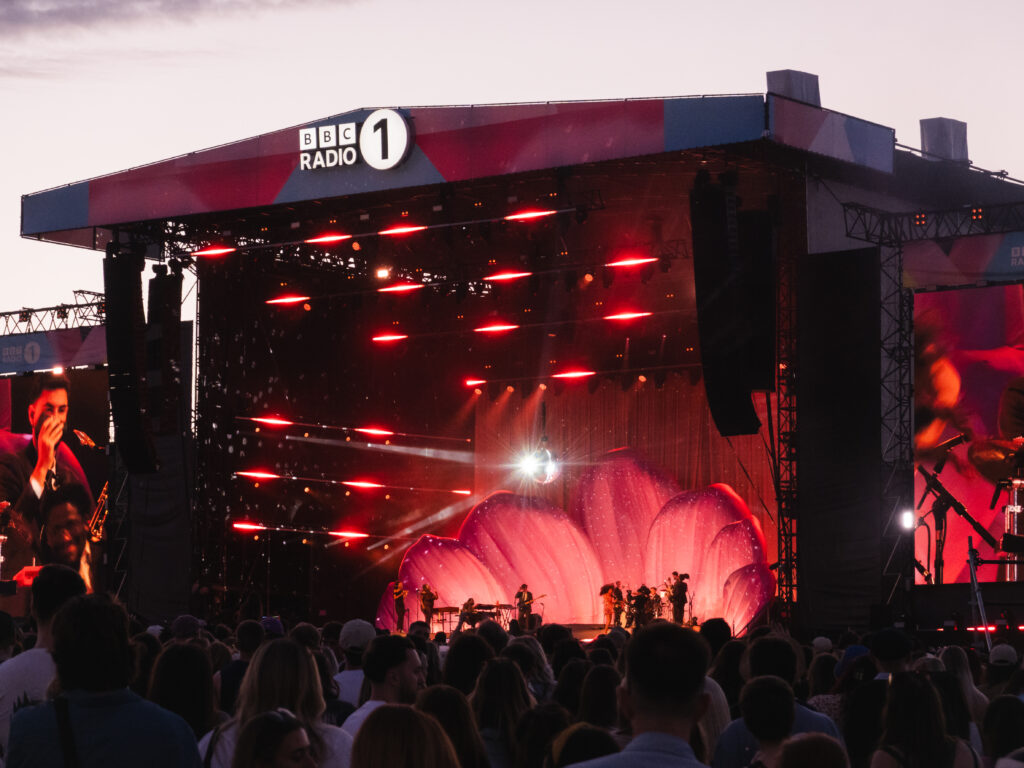
BBC Radio 1’s Big Weekend Review
Words by Martyna Rozenbajgier
BBC Radio 1’s Big Weekend closed Sunday night in Sunderland the only way it knows how: loudly, emotionally, and with thousands of voices carrying across Herrington Country Park long after the final set ended.
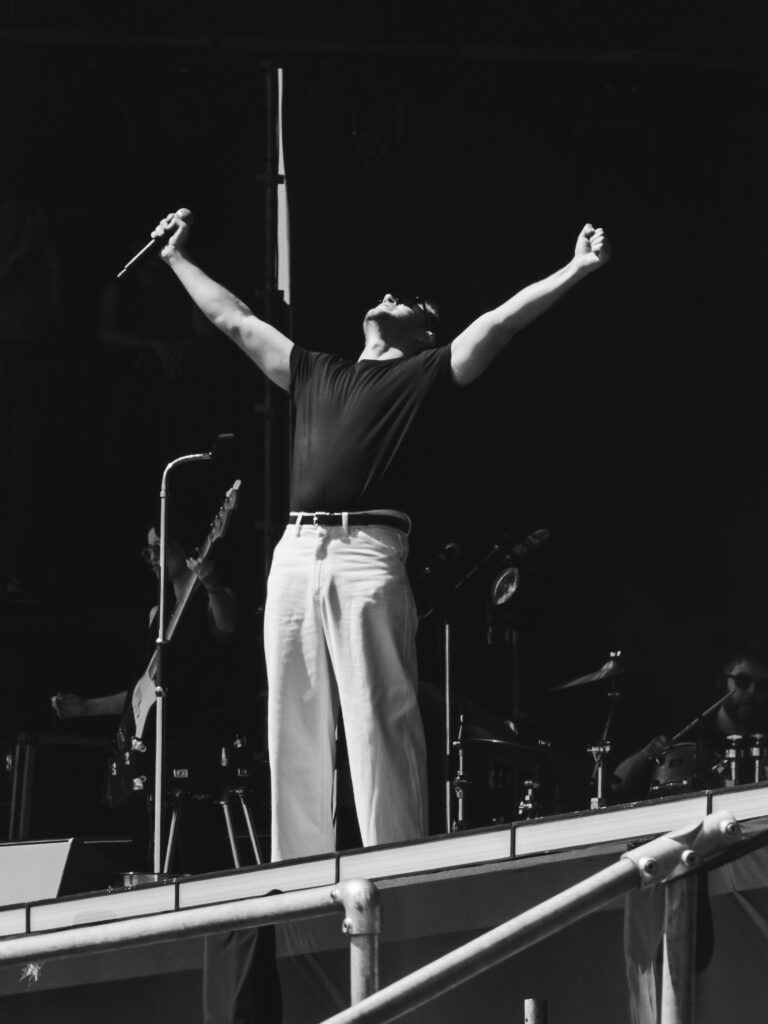
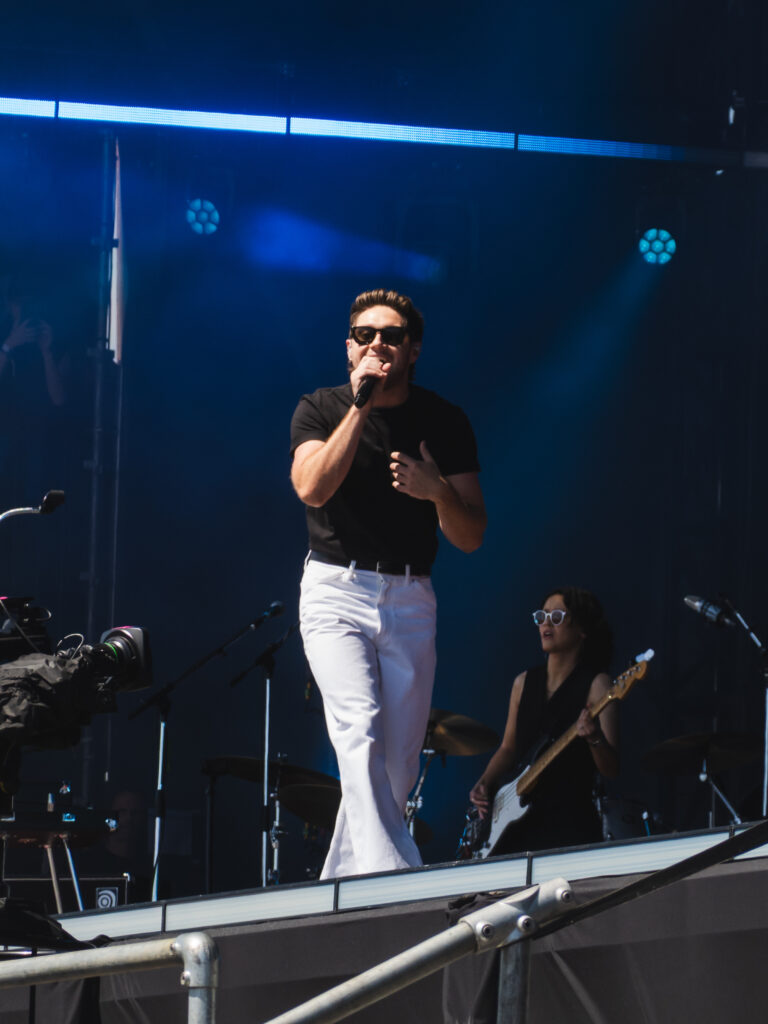
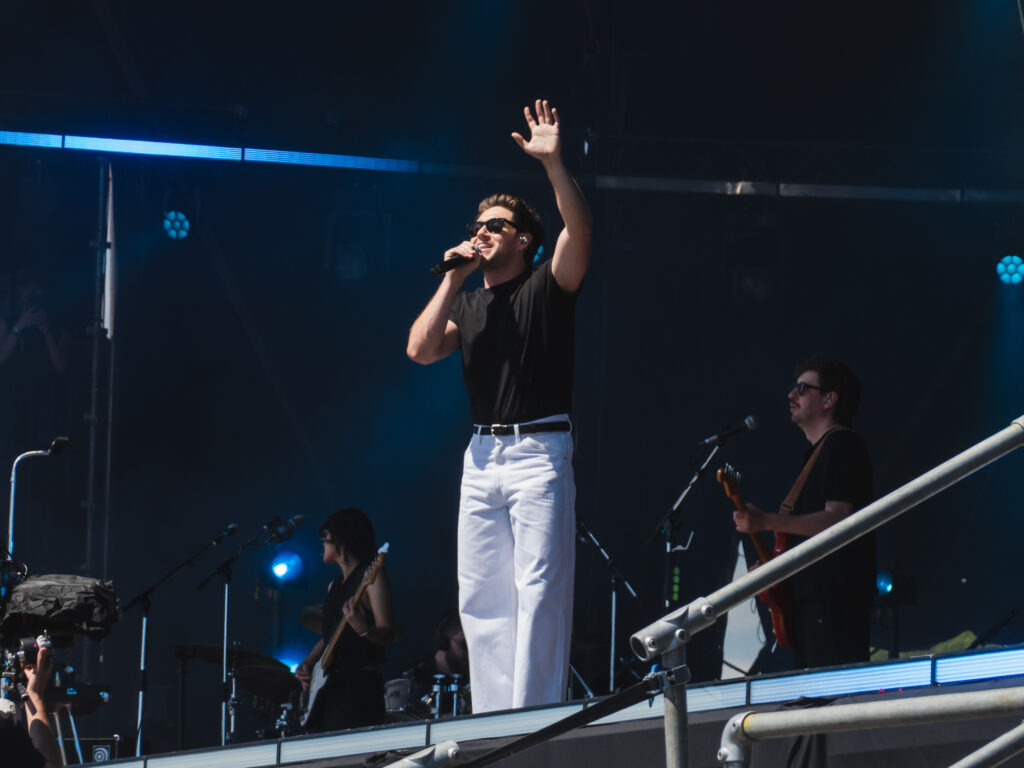
The day started strong with Niall Horan opening the Main Stage — his first full live performance in over a year — and from the second he walked onstage, there was a visible sense of relief and excitement written across his face. The crowd erupted as the opening chords of “Heartbreak Weather” rang out, instantly turning the field into one giant singalong. It felt less like a comeback and more like a reunion between Horan and fans who had clearly missed him.
Dressed casually, Horan balanced nostalgia with a fresh new era. Alongside fan favourites, he debuted new singles “Dinner Party” and “Little More Time”, giving Sunderland’s crowd the first taste of what’s to come from his upcoming album Dinner Party, out June 5. But the standout moment came with the unreleased “Tastes So Good” — a breezy, summer-ready track that already sounded destined for festival season. There was something intimate about the performance despite the scale of the audience; thousands of people screaming every lyric back at him, as if no time had passed at all.
Myles Smith followed with one of the most crowd-driven sets of the day. If Horan brought emotion, Smith brought movement. By the time he launched into his biggest hits, the entire park seemed to be bouncing in sync — drinks in the air, strangers dancing together, shoulders locked. Smith has the kind of stage presence that feels effortless; warm, charismatic, and built for festivals.
The biggest surprise came when he brought Niall Horan back on stage for “Drive Safe”, sending the audience into another frenzy. It was one of those Big Weekend moments that felt spontaneous and communal at the same time — the kind fans will talk about long after the festival ends.
As evening settled over Sunderland, Kehlani transformed the atmosphere entirely. Where the earlier sets leaned euphoric and high-energy, Kehlani’s performance felt slower, smoother, and hypnotic. The crowd swayed rather than jumped now, trading festival chaos for something softer and more intimate. It was a shift in pace that the lineup needed — sensual, polished, and effortlessly cool.
Then came the night’s defining moment: Olivia Dean headlining her first major UK festival.
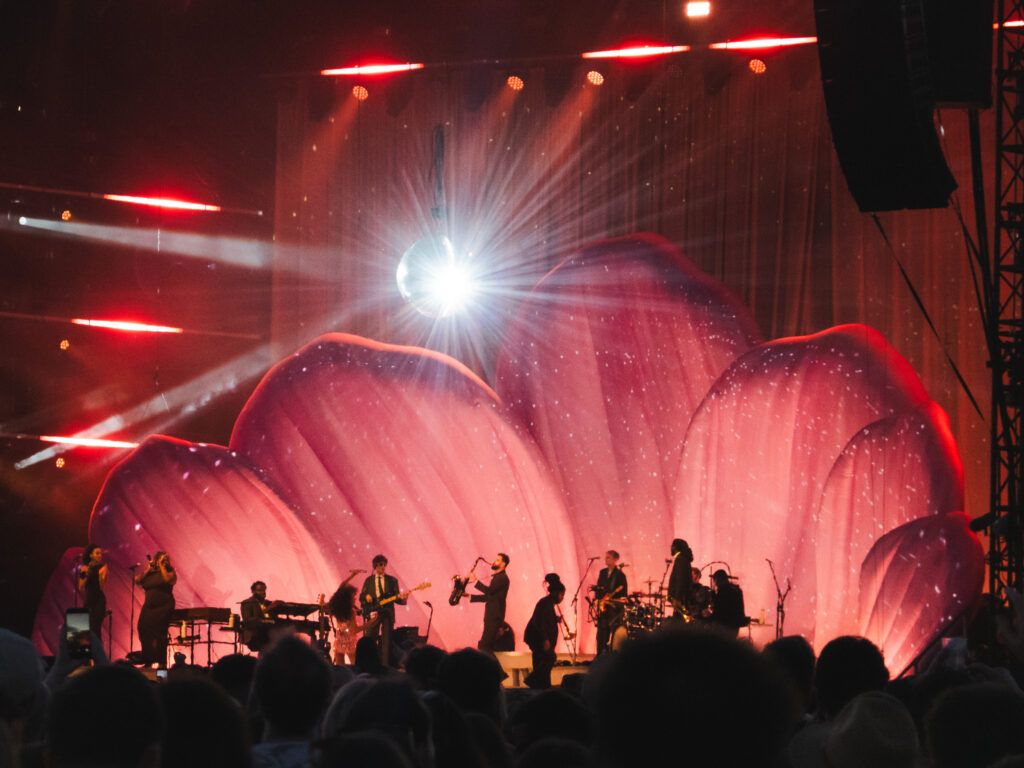
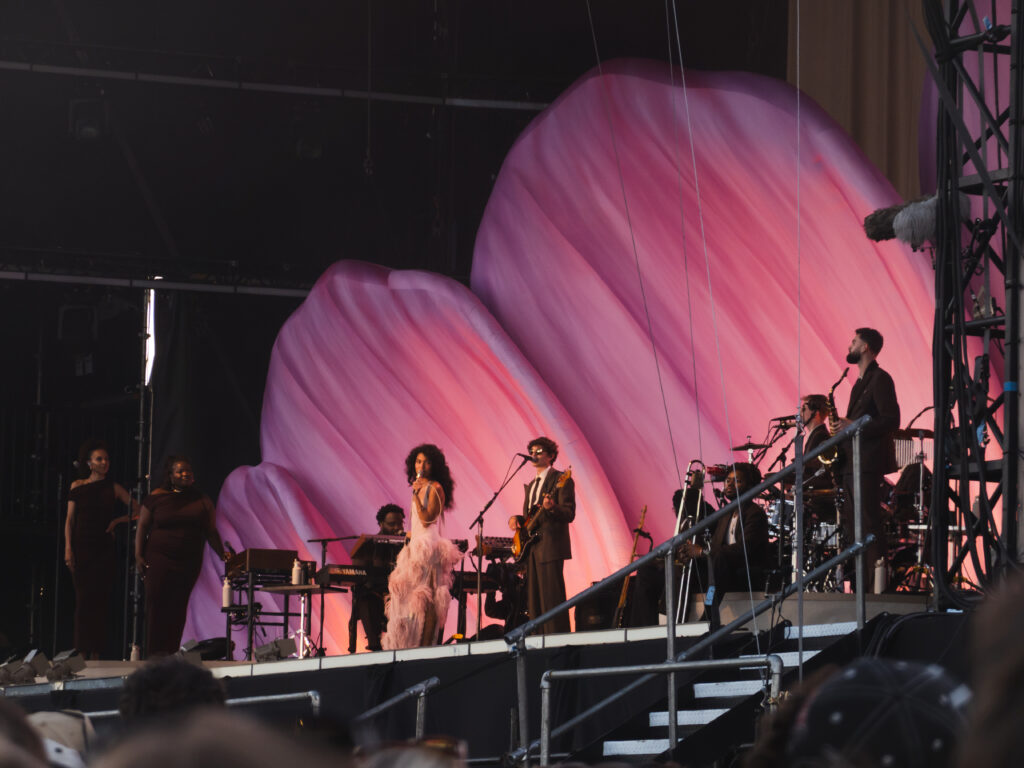
From the second she stepped onto the flower-shaped stage — washed in soft pink lighting that looked almost dreamlike against the sunset — the atmosphere across Herrington Country Park noticeably changed. There was no dramatic entrance or over-produced spectacle. Dean didn’t need one. Her calm presence alone seemed to pull the crowd closer.
Opening with “Nice To Each Other”, she immediately had the audience in the palm of her hand. Watching her headline this stage felt like witnessing a full-circle moment in real time. As Dean mentioned just three years earlier, she had performed at the festival’s BBC Introducing Stage; now she stood centre stage in front of tens of thousands of people screaming every word back to her.
What makes Olivia Dean such a compelling live performer is the emotional honesty she brings to the stage. Even during the biggest moments, her performance never felt forced or overly polished. Instead, it felt personal — like reading pages from someone’s diary while standing in the middle of a festival crowd. Songs like “Dive” and “The Hardest Part” turned the field into a chorus of voices, while couples swayed together and groups of friends wrapped arms around each other as the sky faded from blue to orange.
By the time she closed with “Man I Need”, the atmosphere felt almost cinematic. Fans jumped and danced across the field as fireworks exploded behind the stage, lighting up the Sunderland skyline in pink and gold. For a moment, it felt like everyone in the crowd was suspended in the same memory at once — sweaty, emotional, glittering under fireworks, and not wanting the night to end.
If the Main Stage was about scale and spectacle, the New Music Stage told a different story — smaller, closer, and in many ways even more intense.
Alessi Rose opened the space with raw, diary-like vulnerability, the kind that makes even early afternoon feel personal. There was an unfiltered honesty to her performance, as if every lyric was being written in real time and handed straight to the crowd.
Jorja Smith then flipped the atmosphere entirely, turning the stage into a late-summer party. Smooth vocals and laid-back confidence, and suddenly the crowd wasn’t just watching anymore — they were dancing, fully immersed, as the space shifted into something that felt more like a rooftop gathering than a festival stage in the North East.
The emotion returned with Holly Humberstone, whose set pulled everything back into stillness. Her performance felt almost internal, like overhearing someone’s thoughts set to music. As her songs unfolded, phone lights scattered across the crowd, creating one of the most visually quiet yet powerful moments of the day.
Maisie Peters followed, bringing a completely different kind of energy — witty, sharp, and emotionally devastating in equal measure. Her storytelling cut clean through the afternoon haze, with the crowd singing back every word like shared secrets set to melody.
Closing the stage, Ezra Collective brought everything back to life with explosive energy. Jazz, afrobeat, and pure chaos collided in a set that felt less like a performance and more like a celebration. By the end, the crowd wasn’t just dancing — they were completely swept into it, caught in something joyful, loud, and impossible to resist.
Photos by Wiktoria Wolny