






 Antony Szmierek Interview
“We’re way too far gone… I’d rather fu**king lose all of this, than be a c**t in 10 years who didn’t try and do something about it.”
Words by Cameron Whittaker
You can tell a lot about a person based on what they’re willing to talk about in an interview. For poet/spoken word/rapper/dance music apostle Antony Szmierek, there is quite literally nothing off the table. Antony (34), who is originally from Hyde, Manchester, quit his job as an English teacher to pursue his music career full-time. In this hour and a half exchange (I only asked for an hour), I got an insight into the inner workings of a man who has a lot to say. Never boring, nor self-indulgent. We discussed everything from how a Sunday night in the car with his mum changed his life and the importance of menial small talk, to breaking through without a manager or PR and artists’ anger and distress concerning Palestine.
Cameron Whittaker: Thank you for doing this again, by the way, I don’t know why you wanted to talk to me after finishing your big tour.
Antony Szmierek: I think it’s hard to stop. We got home on Sunday from our last festival of the season in Holland. And then I went straight into this poetry thing for Manchester Psych Fest, which was actually, yeah, I was completely fucked. It’s hard just to completely stop. I have to sort of wean myself off it. So stuff like this is actually genuinely selfishly really helpful to do. It’s quite nice to keep doing things before I go a bit mad, so thank you for taking the time.
CW: Okay, well, yeah. Let’s go for it, I see you’ve got a brew as well!
AS: My Polish Polska mug.
CW: Of course, that’s where the name comes from.
AS: This could be in the thing [interview]. I don’t know anything about it. This mug is all I have of Poland. My Dad, we never knew him. Hit that record button! My Mum and Dad broke up when I was like four and he died twelve years ago. But it was weird the surname thing, it was a choice before I became a teacher, I was like, fuck, do I keep this name now? Cause everyone would call you Mr. Szmierek. I never knew him [Dad], he was an alcoholic, blah, blah. I don’t know, maybe it’s quite nice to keep the name and then people remember it for a good reason? And that was teaching, and now obviously it’s a different thing. So I’ve taken it to extremes really with the gentrifying of the surname.
CW: I’ll be honest, Antony’s the Roman general, that’s a very strong name.
AS: Absolutely.
CW: So, you’ve said you’re pretty shattered after your last tour; how long have you been doing it for now?
AS: I think this has been my first real taste of complete nonstop. So I’ve been out really since February, like genuinely, we did the record store tour, we did a UK tour, went to America, came back, did the rest of the UK tour with Europe and then we went straight to festival season, which has just come to a close. I don’t know, there’s a safety in it now where it can only be that again. The rooms can only get bigger. There’s so much time you actually have to release a new record next year or whatever, and now I kind of know what the routine is. It’s press in February, you do this, you do a UK Tour, you do a record store thing, you come out, you do festivals, you come back and I think maybe on top of that we’ll be doing America and stuff. But I feel a bit safer in it. I feel I understand the process – what the job is now – whereas for years I’ve just kind of been like, what the fuck is happening here? Am I gonna get any time? Or is it just this forever? And you never really feel like – oh, I don’t know – the other bands. Even though they’re your peers and they’re your friends a lot of the time. You sort of look at the other bands and you feel everyone knows what they’re doing except you, and that’s just not true. Everyone is the same.
CW: Who are you playing with, by the way? Who is your live band?
AS: It’s funny because again, it’s a unique setup. A lot of people who are solo artists use session musicians, you know, they’ve been in a band since they were 19, blah, blah. But mine isn’t that. My little brother plays guitar [Mark Szmierek]. Tom, the big man with a Bucket Hat, is my bassist. I met him at uni in halls, so we were neighbours, which is really funny. He hadn’t played bass for like 10 years, and it’s just like, he picked it up. Robin, I met about five years ago when I first started doing the music, he was in this other project, and he’s the most musical. He’s produced a lot of the songs as well with me. But that’s it. It’s a weird grey area where they are paid session musicians, but they are my friends and family. So it’s weird. Tom’s still working as an IT manager.
CW: I had this vision of a school band with all the different teachers, like I don’t know, the P.E teacher on bass.
AS: Not quite! It’s all new to me man. I’m like you, you know, my hobby is going to gigs, or it was before this. That’s how I engaged with the world. You just sort of have to emulate what you like. It could have easily been me and a backing track, or it could have been me and a really cool fucking silhouette with a visual behind me and stuff. But it’s not. I always wanted to be in an indie band, so that’s kind of what it is. That’s why it is presented like that, even though it’s dance music. It’s just me living out my dream as a teenager. To play Leeds [festival] is mad to me. It really is. I went there six years on the bounce, back in the day – Watching Charlie Chaplin, when everything was in black and white.
CW: I don’t feel you’re old enough to self-deprecate about your age.
AS: It makes me feel better, like, your points of reference change. In certain groups of mates. I’m the baby, and then in loads of other groups of mates, I’ll do this whole shtick that I can’t feel my knees and shit.
CW: If I could just take it back for a second, you’ve obviously said it’s your hobby. Do you have a childhood memory, something you think back to now that might have been the place it all started?
AS: Yeah. It’s all reading, I think. It’s all more engaging with film and books and stuff like that. It’s very funny, the one that I remember is reading Hitchhiker’s Guide to the Galaxy on a caravan holiday when I was eleven. All this record is built around that. It’s going to move away, I think, on the second record, from the sci-fi references and stuff, but I really remember that Holiday. That was the first adult book I read! I bought it fucking hilariously in a service station. I just loved it. I loved the way it was written, I felt… I don’t know how deep to get, but since being an artist or being seen as an artist publicly, this huge thing that I’ve got from it is meeting with people [that are like me]. I always felt I was the only one. I felt like an alien! I’m sociable and I’m very good at code switching and presenting and being around people who love football and shit. But I’m just not like that. My brain works in a really odd way, and I think reading that book was, oh, this guy’s one of me, someone who thinks like me. I’ve found that since being an artist in the last 18 months, and it makes me really emotional, because I’ve met, you know, BIG SPECIAL, Getdown Services, Lambrini Girls and, you know, you need these cunts, man, you’re like me! You engage with the world in the same way that I do. That was what reading that book for the first time felt like.
CW: There’s a couple things there. It’s interesting you say a book. I guess you look back at your reading first, rather than having a musical memory. I understand when you say you think in a certain way – say artistically – around your music and then, you know, there are football lads and I can be that person as well, but it’s really nice to be around people who care and actually are passionate about [music] it really gives you a lot of energy.
AS: It does, and I think it’s important to have both of those things, say all the art I like, or the writing I like, it’s just honest. People who speak passionately about football, for instance, it’s not my thing, but I understand, I understand why it’s good, I understand why it’s helpful. It’s church for a lot of people! There are ways to understand it. I think just getting to a point where you really understand yourself is so healthy and so freeing. I am highly emotional as a person, and I think I hid that away a little bit. Now I get to do it as a job. I couldn’t have just stood there silhouetted, standing still. It’s not me. I’m giddy and I’m excited and I want to play man! It’s fun for me. I’m allowed to do this thing and I think all of my favourite artists and writers and stuff are just that, even if they’re bad weirdos, they own it. We’re not here long, and I think you’ve just got to be your truest self, that’s the cheesiest way of saying it, but I think that’s true.
CW: The way you jump around the stage and engage with the audience and everything is just great. I feel for a lot of people, you made them have a good time. It was so much more memorable than a lot of the gigs I’ve been to.
AS: Yeah, I think people are scared of looking cringe or whatever, but a lot of people that are at gigs, especially at that time in the day, are shy. You’re the facilitator ultimately, and I’ve been fucking hired to be the entertainment. If you take all the art out of it, you’ve got to give everyone that moment and you’ve got to give everyone the time to loosen up. There’s been another five Antony Szmierek’s since I’ve started and they all have different influences or whatever. I think hopefully what I’m doing, it’s just honest and sincere. I also think what I’m trying to do is make it objectively good. If I can get to that, then I’m fine.
CW: From what you’re saying, I feel like since COVID, there’s been a massive problem with crowds and gigs. A lot of the gigs I’ve been to – and I think there are so many reasons for this – have had a really poor atmosphere. I think some artists have struggled to engage with some crowds and, I don’t know, perhaps when some people went a few years without seeing live music, they never learned some of the etiquette from some of the more experienced gig goers.
AS: I think this year’s festival season has been, in the five years since I started, the first year where it really seems that it was that earnestly back. I think it’s because everyone has had time to learn how to get into gigs again, even if it was later in life. It’s like, that’s their night out, if they don’t really understand, say the etiquette of it, this does sort of dampen things. But yeah, it’s mad, I see so many TikToks of people saying, oh, at Fontaine’s the crowd was so dead around me and all that sort of stuff. It’s definitely a thing that people are noticing. You have got to be a showman, but then I do kind of get the other side of it. I get that you should be able to go and watch The Cure or Dive, and just stand and nod and having a fucking zoot and just be like: this is sick. It’s weird, there’s two sides to it. They just don’t seem to mesh.
CW: It’s super multifaceted. There’s corporate sanitisation, independent venues dying. At the big stages artists are playing, people aren’t moving around a lot. There’s just so many things going on at once.
AS: The reason there’s that crowd safety, not to an old cunt in this scenario, but it used to be terrible. When I first started going to festivals when I was 16, 17, so the main stage crowd, right, everyone would go here and there was no safety. Nothing. It was so unsafe. Now there’s a fucking cruciform thing in the middle, but it use to be fucking terrifying. I remember seeing The Prodigy in 2007 at Leeds Festival and it was a common thing in crowds for great swathes of people to fall down at once. I’m talking, thousands of people would all fall down, and everyone would have to pick each other up, and it was definitely not better; but it’s like, obviously you’ve got to put in safety procedures, but then it’s kind of not the same?
CW: What was your first album? Do you remember your first album you ever bought?
AS: It was Nellyville by Nelly! I remember that was the first one I bought. It’s not the coolest ever, but it was the first one I ever thought: I’ll get that CD. The other big one for me was always the Arctic Monkeys [interrupted].
CW: Whatever people say I am, that’s what I’m not! That was my first album. Oh, yes sorry, continue.
AS: The one with the little cigarette [grinning], but that album changed a lot for me. That was the real switch for me, where I was a bit like “this is going to be my life”, and that’s a huge reason that I started writing and that was a huge reason that I wore what I wore and did what I did and made what I made. I wanted to be Alex Turner basically, and it just felt like it spoke to me. I remember hearing them for the first time in the car with me mum on a Sunday night. I was just like, what the fuck is this? To have that moment [contemplating]. I wasn’t even into music really. I just remember being so taken by it, and it was a similar thing. He was inspired by his English teacher; likewise, the only teacher who really was nice to me was my English teacher at school. You know?
CW: [Speaking about Manchester] I always find it really nice when someone has this real warm experience of their area growing up or home.
AS: I think it’s great, it’s kind of unique, isn’t it? It’s weird because I don’t feel fucking patriotic about being from England anymore – or I haven’t since being an adult. It’s difficult to find things to be proud of, you know. What even is that anymore? But, I feel patriotic about being from Manchester to an extent because, I don’t know, I see the good in it, I see the good in people. There is a difference coming back from London and going into Manchester, and everyone is all, “I love you, you al’right?” [dialling the mancunian accent up]. It makes me cry. I get on the tram, and I just love listening to people talk to each other about mundane bullshit.
CW: There’s so much dividing us now, especially with social media and the internet. It makes us super insular and really tribal. It is actually so nice to just walk around somewhere and be able to bump into someone to make shit small talk.
AS: It’s kind of annoyingly important, I think. It’s a funny thing, the little things we hold on to. I mean, that’s why loads of the lyrics are just overhearing people say things and going: that’s so nice, you know? In the north of England, everyone speaks really poetically. Everyone’s got funny turns of phrase, and I’m realising that everyone speaks in little poems. I think we’re alright in Manchester, but I’m always quite jealous about the Geordies, the Irish and the Scots. They all meet with each other, even randomly at like festivals, and go so fucking crazy.
CW: Right, I’ve got a few songs I really want to know more about. Number one: Mango Mood. Where is the sample from? I need to know.
AS: Fuck me. That’s Thomas. There’s a voice note. I’ve got the original voice note in my phone somewhere. That is literally how he said it. All of the inflections on that voice is exactly how he did it. Like, it’s even the timing of the note, the “oh yeah, baby” at the end. You know, “garlic mayo all over the chips.” It’s the best thing! I mean, it’s so funny. I think Mango Mood holds up fine, or whatever, and Tom used to do it in the live show, which was really fun. But yeah, it’s quite hard to make a mate from uni do Mango Mood to ten thousand people. I mean, when that EP came out and all of those older ones [EP’s], I mean, they were going out to nobody. Man, that was so local. There was nobody listening to it. Nobody! I’m talking less than a hundred people it was going out to. It was just nothing. So, it’s fucking weird that it gets to this point in and people are listening to them.
CW: I also wanted to ask about Yoga Teacher. I want to know, is it just about some very sexy yoga teacher you had?
AS: I mean, it’s so fucking funny because so many people have guessed the specific guy that it is. I don’t want to just say, “yeah, it’s him”. But I mean, for this guy, it shows how fucking mad his practice is if so many people can get specifically who and where he is here [from the song]. That’s another one where I think the way I write songs now and since just before the album are different. I’ve got better at it, I think. For me, instead of being able to just sit down and go, “Oh, I’m proud of that”, it has to work on more than one level for me. It’s got to be a piece of writing, it can’t just be a song.
CW: So, for you, which comes first: the beats or the bars?
AS: I write them as a poem, I write them as a story, even. Parts of them rhyme, parts of them don’t. And then I think about how to offset it. So if it’s too sad, I’ll try and make the beat happy. And I’ll try and confuse it a little bit and I’ll try and do the opposite of what it’s supposed to be. I think there’s only really one where it’s not like that on the album, and that’s Restless Leg Syndrome. I think it’s my favourite song. We don’t get to do it in festival shows. We did it on the headline tour, everyone would go off and then I would come back on my own and do it, and I used to burst into tears man. Even after doing it so many times, there’s certain lines that would still get me.
CW: I thought when I listened to it, it was the most poignant. It made me a little bit emotional as well. It’s just so, it’s just so beautifully written. And the production’s great.
AS: That’s the one that I always wanted to connect. The instrumentation really matches how it feels, so it’s almost like a double gut punch. The lyrics are sad, but then the fucking music is sad as well. So it’s really doing its job. Usually, a lot of the time, I’ll steer away from that kind of thing. If I’m saying something too sad – say in Yoga Teacher, about my dad not being around – I’ll do a joke or drop the funky baseline or something stupid. But that was one where it was just going to be honest. Even the lyrics in that second part of the album I’m like, where the fuck did that come from? Or why did you feel you could put that on an album that people have in their house. They can listen to that whenever they want! Crazy, isn’t it? It is mad. It’s really honest. There’s one I’ve written for the second record, which is akin to Restless Leg Syndrome, which is another sort of the super honest reflection of where I currently am. That was another one that was fucking hard to record and hard to listen back to. So I think it does the same job. You’ve got another one coming.
CW: I think this song especially is a place where you tap into, not just how you feel, but the feelings of a wider community of people. I have restless leg syndrome as well, and I sometimes lay in bed in the early hours reminiscing over a past life; it feels like you’re tapping into something more. Maybe that’s why it just stuck with me.
AS: I got over the fear quite quickly of going wrong. I’ve never tried to write for anyone else. The reason I’m doing this is I’m writing for everybody. It’s very rarely just about me. It’s supposed to have layers of ambiguity, so you can take on board your own emotions. Because people write in a really hyper-specific way, that can become more universal than if you’re trying to write for everybody. I don’t know why that’s true. It’s something that I’ve learned from a lot of artists – Phoebe Bridges is really good at it. She’ll mention a specific street in Texas or somewhere I’ve never heard of, but it can remind me of my own equivalent of it. Weirdly, with Restless Leg Syndrome, or even in a similar way, The Great Pyramid of Stockport, you don’t have to know where Stockport is. It’s just something about these old buildings that everybody has in their towns that remind us of the impermanence of being alive. It’s a really silly, upbeat song, but if you sort of just write it down and read it, it’s very wry. It’s very similar to Douglas Adams, that one. But they all look different written down, and they all look different if you perform them without a band. If you perform them without jumping around, you can really do quite sad versions of them. Take Rafters, I did that as a poem the other night, and it was fucking sad; if you take that chorus, “I’ve worked out the meaning of everything, I used to get by so easy, but now I’m crumbling.” I’m not the best musician, I’m not the best writer, I would never think that, and that’s not a thing that I ever really want to think. But these songs are one of one, they’re like, only I could have written them. So that’s all I can aim for. I’ve done the most honest version of what Antony writes, and then I’m super happy – and yes, I do refer to myself in the third person.
CW: You mentioned earlier, when your first EP went out, you had a hundred people listening to it. So how did you break through? Was there a moment you shot up, I guess?
AS: Yeah, it was a fluke and a lot of it was retroactively lied about. So I had these little EP’s out that like, only a hundred people listen to. What happened was I was on a night out and Tom, the bassist’s, best mate’s ex-girlfriend was there [tongue twister]. She had just got a new job working at Six Music as a producer, and she had listened to my EP. Her job was producing the Craig Charles show, and she played him Dreamscape, and he had really connected to it as he used to be a poet. He had this moment with it and said I want to play it on the show. So I had no manager, I had no radio plugger, I had no team, I was teaching, I had literally nothing. I listened to Six Music every day, and I was freaking out when it played. Nothing happened for six months, I couldn’t even get played on BBC Introducing, right? Then Craig played it again, and then Lauren Laverne – she was doing the breakfast show – huge listenership, huge mover in the music world; so she played a song and compared it to Mike Skinner. There was this massive spike in listeners, and I was still going to work. I was getting emails from lawyers saying, “Who’s your radio plugger? Who’s your manager?” I didn’t have any of those things. No one believed me. They said, “You must have, or you wouldn’t have been on the radio.” Anyway, Hitchhiker’s Guide to the Fallacy was what she ended up playing every day for weeks. I’ve never even heard anything like that. It ended up getting on playlists, independently of a manager, independently of PR – which is not how it’s done. So everyone in the industry is freaking out and saying, “How the fuck is this guy doing it?” When you peel the surface away, the industry is very vacuous, and it’s very much about how you look and how you present yourself. But I got to do it in my own way, which is amazing. You know, I’ve been to parties down there [London] and I get invited to shit all the time. I have no interest in it, really. I’ll go for a minute, and there’s the odd thing that I’ll go “Oh that’s cool”, but no one’s having a fucking good time. You could be sat next to the most famous people in the world – it’s amazing for two seconds – but you could be in the pub with your best mates and there’s literally nothing better than fucking twating Guinness in the pub with your best friends. That’s as good as it gets.
CW: Did you do English literature at university?
AS: I did English language. I went to uni so I didn’t have to share a bedroom with my brother anymore. That was my way out. I really admire people who knew what the fuck they were doing when they were 18, 19, because I didn’t! I was just pissing around and getting leathered, so I was lucky that I got through, and that’s when I started writing. I remember the very moment as well, we were having a house party, and I was in my room. I can’t remember what we were doing, and someone looked at my bookshelf and was like, “Where are your books? I thought you’d have more books as an English student.” And I took that really personally and became the most avid reader of all time. Then I started writing. Weirdly, I always felt I didn’t deserve to be there. But by the third year, I was like, I actually like this, I like reading and I like writing and I want to do that.
CW: It would be nicer as British people if it wasn’t such a faux pas to be passionate about the things we love!
AS: I surround myself with a lot of people who are very comfortable about what they’re doing now, which is good and it kind of rubs off on you. But I mean, when I went and called the EP Poems To Dance To, I was shitting myself even calling myself a poet. I was like, I don’t want it to sound wank. I always see these fucking horrible Instagram shitehouse poets, and I don’t want to be associated with these guys. But I think, you know, if you hear any of my stuff, you’ll say it doesn’t feel like that. I’m not putting on a poetry voice, and I’m not doing any bullshit: I’m just expressing myself really.
CW: I wanted to just ask actually, I saw you at Reading Festival holding the free Palestine sign. I don’t want to get you into trouble or anything, but do you think people underestimate how much artists do care about these issues, how deeply it affects them and how seriously they are able to discuss these existential plights, such as what’s happening in Gaza.
AS: It’s so hard. People who are making art and are putting art out in the world, they do really care about it. We’re genetically predisposed to be such an emotional wreck that you can share what you’re thinking all the time. Annoyingly however, you’re not the best person to cope with how that feels when you get off stage, and you’ll overthink things, and you’ll get upset. Particularly with what’s happening at the minute, with what I’ve been talking about, about the show being honest, for a long time last year I was thinking, where do I fit in all this, and what can I offer, and what’s my job? The show and the record was supposed to feel really hopeful, and that was the point of it. It was super serious and super honest and super hopeful, that’s why it ends at a wedding, and that was the show. I used to mention when I was talking – vaguely – I’d say “the world’s gone to shit, but you know, let’s all have a dance.” If I’m being honest, the show started to feel insincere if I wasn’t specifically talking about things, if I wasn’t talking about trans rights, and I wasn’t talking about what’s happening in Gaza. To be honest, I started to feel disgusting if I didn’t specifically mention these things. As my audience grew, I actually started to think, “Oh, I am in front of a decent amount of people here.” I used to always think people would just guiltily say buzzwords on stage and then do a mosh pit and that’s pointless. If you preach into the crowd, you preach into a left-leaning audience anyway. I remember mentioning trans rights on stage at Glastonbury, and I felt some people in the crowd didn’t agree with what I said. I was in the Left Field stage at Glastonbury. So they’re there [people who don’t agree with me] so it’s not pointless, I’m not preaching to an agreeing crowd. It’s been so upsetting what we’ve seen with everything that’s happening. You know the thing that happened with The Mary Wallopers? At Victorious Festival? That was the day after we played Leeds [festival]. I went home, I was buzzing with the show, I woke up the next day, and I woke up to the thing from Victorious Festival. I was really upset, I was really really angry, actually. It was affecting my friends, my friends’ band were on the next day, we were watching censorship in real time. I was really upset about it, and I knew I wouldn’t be able to keep it out of the show at Reading. I was upset, even more than anger, I was upset. Then, luckily, there was this girl, she was Australian and they brought that sign, and that sort of helped me get into talking about it all. It’s a big responsibility that rests on everybody’s shoulders as an artist. But it’s also like, if you’re not fucking doing that and you’re not talking about it, then what the fuck are you doing here? That’s the point of you as an artist, and if you’re not doing that [a brief pause]… It’s so strange that even as an interviewer, I know you’re just looking after me, but that you have to preface asking things with, “I don’t want to get you in trouble.” I get it, and I’ve had that all the way through, it’s so kind that people give you that out. But now we’re way too far gone. We’ve been driving up and down the motorway with graffiti that says stop the boats and there’s flags everywhere and stuff [another brief pause]. Do you know what? I’d rather fucking lose all of this than be a cunt in 10 years who didn’t try and do something about it. It’s so hard, man. All of this feeling, and everyone who’s not getting on stage and doing stuff is feeling it, but this is the worst that it has ever been. I can say that as a 34 year old, and it’s like, where the fuck do we even go from here man?
CW: Hearing you say that is [pause], it’s really lovely to hear. I just prefaced the question, as I know, as an artist, you have a publicist and management now. I also know some people aren’t comfortable talking about it. It’s refreshing to hear you say you’re conscious about your audience agreeing with you. Maybe some people are superficially talking about it because they know it will get a cheer and massage their ego. It’s just really refreshing to hear you say that some people in the audience won’t agree with you, but you’ll do it anyway.
AS: To be fair, I would feel more fucking disgusting if I was doing it and everyone agreed with me. If I’m saying something and there’s a few people I’m watching shake their head or they’re not sure about what I’m saying, then there’s a purpose to what I’m doing. It’s not a performative thing. I always think art is political, and living on planet Earth is political.
CW: “Oh, the music shouldn’t be political” [mocking]. I always think, have you listened to any lyrics over the last century?
AS: But yeah, I would be super angry off-stage, and we’d be really annoyed in the band about things, and I’d be like, okay, we’ve got a show, and the show is this, and it’s hopeful, and I don’t want everyone to feel guilty about these things. But unfortunately, things have got so bad [in Gaza] that it is part of it now.
CW: The fact as well, that it has fallen on artists to actually be pushing the cause because politicians and leaders are failing to talk about it. It’s farcical that the burden of responsibility even falls to you/artists.
AS: It is weird. I think people do look to you for help. I mean, I look at other people to be my North Star. I’m doing a fundraiser with Billy Bragg at the end of the month in Shepherd’s Bush. He’s a really good North Star for me to follow, and he’s been in this shit for fucking forty years. He’s seen conflicts arise and fall, and he knows what he’s talking about. So I look to Billy and I look to other artists that I respect for guidance, in the way that some younger artists might look to me. It’s mad that it’s our job, but, you know, we’re also in a hugely privileged position. It’s like, I can’t go on and moan that, “oh, everything felt this, I’ve got to do this show, I don’t know that to say”, when there’s fucking hospitals getting bombed in Gaza.
See Antony Szmierek supporting Confidence Man at Mayfield Depot, Manchester, on the 24th October. Tickets are still available now.
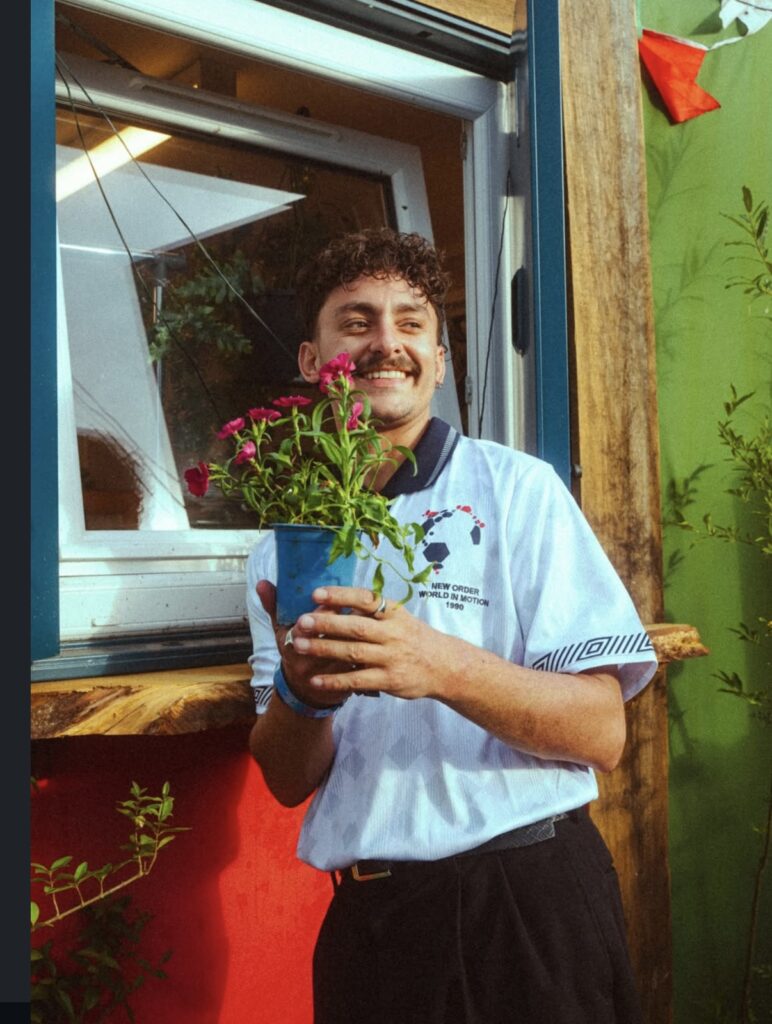
Photos by Jamie-Lee Culver and Zak Watson