





 Interview With The Chameleons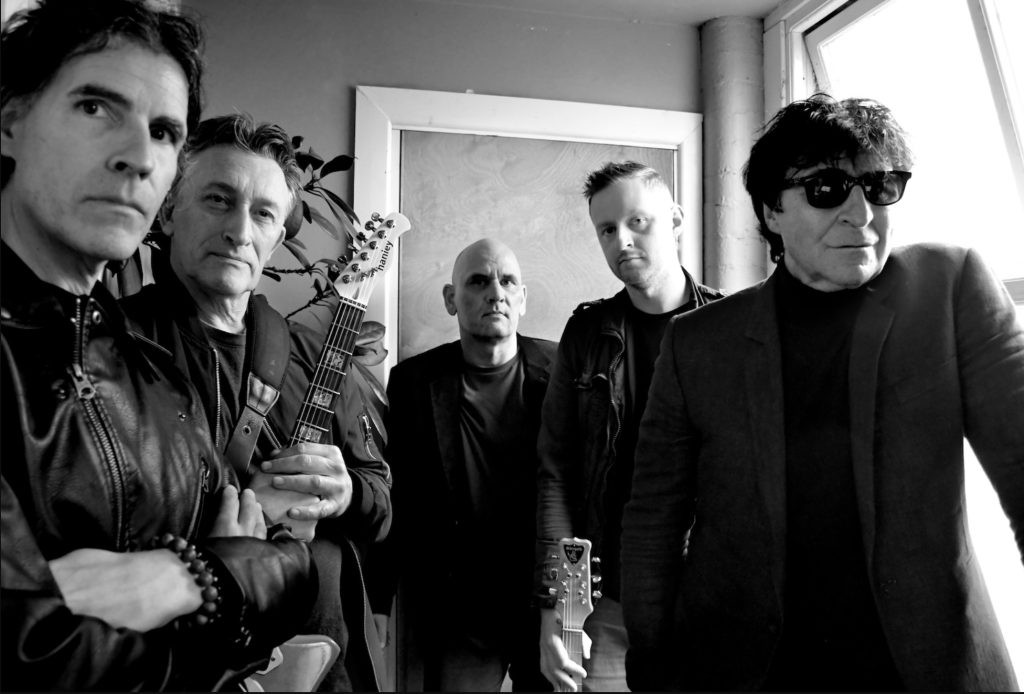
In Conversation With Vox From The Chameleons
Words by Chiara Rosati C.
November 14th 2025, Electric Ballroom, Camden, London. I am about to interview the frontman of The Chameleons – my favourite band of all time, and one of the most influential post-punk bands from the 80s – ahead of their show tonight. I walk backstage. Crimson walls. Eclectic concert flyers. Rock music is roaring in the background. “Don’t meet your heroes”. A saying we all know too well, attempting to scare me out of my venture. “I am where I am supposed to be”, I tell myself as I take the last few steps leading me to him. Vox. He is waiting for me outside the tour bus with a cigarette dangling from his lips. My fear abandons me the second I shake his hand. There is something comforting about his eyes. We step inside the bus. Fear surrenders its crown to anxiety. I keep mumbling, thanking him for accepting the interview. Am I good enough for this? Am I deserving enough? “Just stick to the questions you prepared”, I tell myself in vain. When have I ever done that? I must acknowledge the moment, its emotional weight, its existence, balancing it with my own. He is tangible now, right in front of my eyes. I can’t count the number of hours, of nights I have spent in his voice’s company. Vox. A voice. That is who he is. That is how I have always known him.
Photo by Mick Peek
When I listen to The Chameleons, I personally feel like I am entering a different dimension, out of space and time, which, of course, is connected to the dreamlike and surreal atmosphere that your sound evokes. Do you feel this shift, too, when you create and perform your music?
Yes. I mean, what I contribute to the group is the melodies and the words. You are putting yourself in that sort of state, and the atmosphere of what you’re creating induces the theme of the melody and the theme of the songs. In terms of live performances, it has changed recently, but the stage for a long time was my only safe space – that was about as authentic as I would allow myself to be, and then the masking happened when I came off. I was in a very liberated space. Normally, I’m so focused on the music to try to make it happen that I become less aware of the audience, so I kind of am in a place outside space and time in a way. I’m always surprised when we get to the end of a show because I’m so insular, inwardly focused while performing.
That’s something that really resonates with me and how I feel on stage, but I think I use it more as an emotional defence mechanism, trying to reconcile my mind with the fact that I suddenly have an audience witnessing my performance. I’ve realized, after interviewing many bands, that musicians on stage tend to be either inwardly focused, like you said, or hungry for an interaction with the audience.
There used to be an element of that, as well, that I kind of outlived now. I went through quite a transformation. I stopped wanting or needing any kind of external validation.
That’s the dream, isn’t it?
Yeah, it took me a long time to get to that point.
“Script of the Bridge”, your first album and my favourite of all time, is also one of the most influential albums in the history of post-punk. Did you expect it to have resonance to this day?
No, I just believed I made a good record. It was weird because we started as the flavour of the month down here, so we were getting introduced to all these people, and we met Steve Lillywhite, who we all admired for different reasons. We went into the studio with him, and we made this single intro, which I thought sounded incredible, but then he didn’t want to do the album. He said he had a choice: doing “Script of the Bridge” with us, although that wasn’t its name at the time, or the third U2 album. He said, “I have a rule, I never make more than two records with one band”, so I really thought we got him at one point. Then, everyone else we got introduced to… we just weren’t really interested in their ideas for the album because they wanted to cut all the songs short. They said we didn’t need the second half of “Second Skin” and “View from the Hill”.
They were going to butcher them.
Yeah, they wanted us to do that, so we said no to all these people. CBS drops us, so when we come to do the album, we’re back on our own again, we’re self-producing it, which, after working at such a level, was a bit daunting. However, I learned a lot working with Steve Lillywhite and then with the BBC, so we had a little bit of cockiness about this. About halfway through the process, I’m thinking, “Yeah, this is going to be quite good”, but I didn’t know, I didn’t imagine that 40 years later people would still be talking about it.
It’s a wonderful album, and throughout the years, the band has evolved but also stayed faithful to that signature sound.
Yeah, I mean, the sound was crafted more by Dave (Fielding) and his use of the Roland Space Echo and the fact that he was often in an altered state of consciousness, shall we say. It was very inspirational what he did, and he was a very talented guy, but that can also be a bit of a straitjacket because we didn’t really want to keep doing the same record over and over. Somebody asked me the other day what the turning point was for us, and I think each stage was a turning point. The only reason why the second album has got any similarity to the first one is because it was a contractual obligation. We wanted to get out of it, so the deal in the end was that we would go clean if we made another record. We didn’t want to add too many new songs, so a lot of the songs on that record were tracks that didn’t make the first one. With the new material on it instead, we did something different. “Home Is Where the Heart Is” was mainly strings, “P.S. Goodbye”… well, we’d never done anything like that before. I mean, had we been making a second studio album in the way that one would normally do that, I think it would have been even more different. “Strange Times”, our third album, is a departure again, because we’d never done anything like “Caution” and “Tears”.
“Caution” is my favourite song from “Strange Times”. I also love the album cover! Well, I actually love all of your album covers. They look very surreal and Daliesque.
Reg (Smithies), the guitarist, does all the sleeves, or at least most of them. I really like the one for the second album, “What Does Anything Mean? Basically”. In fact, for a long time that was my favourite thing about that record.
Oh, really?
Yeah. I liked the songs, I just didn’t like the production and recording it wasn’t a particularly happy experience for me, so I never really rated it. I thought the songs were great, but I thought the Peel session versions were better. However, I think my favourite cover is the one for “Arctic Moon”.
Lyrically speaking, instead, your voice feels very existential, often dealing with dilemmas inherent to the human condition. What is it that sparks and inspires these lyrics within you?
Everything that is in there is a reflection of my own experiences and how I perceive things that are going on around me. I didn’t even know what existentialism was. I remember that one of the girls who worked on “Script of the Bridge” one day told me I was an existentialist, and I was like, “What’s that?”, so she pointed me in the direction of some authors that cleared that up for me. Right now, I’m existential in the sense that I’m still interpreting experiences and why I do the things I do, but I’m not questioning it all as much as I used to, and I think that’s natural when you get to my age. I think if you’re still wondering about the meaning of it all at the age of 65, then… well, you should’ve sussed it out by then.
I always say that I am constantly going through a never-ending existential crisis, so I hope that in a few decades that won’t be the case anymore, haha.
I mean, if you’d asked me that a year ago, I wouldn’t have been able to say this. I went through a transformational experience, and that really changed a lot in terms of the way that I look at myself and my place and how I relate to the world.
Have your sources of inspiration also changed?
Not really. The sources of inspiration are pretty much the same, but the themes are probably more personal because I’m putting myself under more of a lens now. Before it was all about universal experiences and how I interpret them, whereas if you look at our last album, “Arctic Moon”, aside from maybe “Saviours Are a Dangerous Thing”, it’s very personal, it’s probably the most personal album.
I love “Saviours”, though, that is probably my favourite song in “Arctic Moon” together with “David Bowie Takes My Hand”. You must have a pretty strong emotional connection to Bowie.
Yeah, I grew up loving Bowie, but that song is not about him. I was in a really bad place emotionally and psychologically. I was in a hotel room in Berlin for 48 hours, and that was really the end of my rope. Obviously, I turned to music, so many of us do. One of my favourite songs by Bowie is “Rock ‘n’ Roll Suicide”; it came on, and it really perfectly expressed exactly how I was feeling. I was just numb, dead inside, and everything tasted like ash in my mouth. I didn’t care if I lived or died, but then I had this big uplifting ending. “David Bowie Takes My Hand” is a response to that, really, because it saved me, that song. It was a very profound experience.
It certainly sounds like it was a life-changing moment. I had a similar experience when I was 17, which, I guess, is what happens when you’re shifting into adulthood, shedding layers of crooked beliefs imposed by tradition, family, society, and so on.
Yeah, that is a normal part of life. For me, this was interesting because it happened in 2024, which was a good year for work. We were working a lot, doing shows, but my personal life was terrible. I had one of the worst years I’d ever had in my life.
I’m sorry to hear that…
No, no, don’t be! Because at the end of that year, as I say, I went through this transformational experience that wouldn’t have happened if even one thing had been different. If any one thing had happened differently, I would have reacted differently, and it wouldn’t have brought me to that point, and that was the greatest thing that ever happened to me, the greatest experience I’ve ever had, so I’m grateful. I think that’s a good way to look at it when you’re having a really horrible time. I don’t want to trivialise or minimise the pain that people go through, but whatever the experience is, you need to go through it because that’s what life does. Life doesn’t give you what you want all the time, and it doesn’t give you what you expect all the time. It gives you what you need, which really shines a light on some of the darker things that you go through. You look back on it, and you realise that it needed to happen. I needed to have that experience because otherwise everything would have been different, because that’s the nature of physics. It’s all based on choices.
It’s the butterfly effect, isn’t it?
Yeah. Thankfully, I’ve always had the ability, even in my darkest moments, to see the most positive choices available. If I’ve got options, usually the options are very dark, but there’ll be at least one that’s positive, so I go with that, and it’s always led me right.
You know, my mum always tells me that everything happens for a reason. Sometimes I struggle with this theory, but I guess it’s a positive way to look at life.
Yeah, I believe everything happens for a reason, too. I’m very Buddhist in that respect. I think we have the experiences that we’re meant to have. There is a myriad of choices you can make, right? If you’re in a situation where your life is shit, you have to take accountability for your own choices rather than blaming it on this or that. It’s all about trying to make the most positive choice that’s going to take you forward and help you evolve, heal, and grow.
That’s comforting to hear because taking accountability implies that you do have some sort of control over what happens to you, not complete control, of course, but you’re also not just at the mercy of the waves of life. Did this different mindset you have now also change the shape of your creative process? For example, if you think about the work behind “Arctic Moon”.
I was kind of worried because, before I had this experience, I tried therapy. Therapy is good, I won’t deny it, but the things that were driving me were so deeply cemented into my emotional side that an hour a week of therapy wasn’t gonna cut it. I had a great therapist, and I’d have an emotional release, and that would help. However, there’s this book that I read that explains how the body holds the score, the traumas, your experiences, and I believe that. You carry them, so you have to get them out, release them. Therapy is a good way of doing it, but the way I did it was… well, six days or seven days of that was worth about 15 years of therapy. Anyway, before “Arctic Moon”, I was worried because I was wondering if those traumas and neuroses were the source of my creativity. If I heal myself of that, am I gonna still even want to be creative? Now I know I didn’t need to be worried because my natural state is just all about communicating, ideas, and expressing what it is for me to be alive. People can then see whatever they want in it, and hopefully it’ll help them because that’s what music does for me.
I had similar reservations when I started therapy, but thankfully I came to the same conclusion. Our traumas often inform what we create and the uniqueness of the final product, but that’s not what defines our identity. You mentioned you ended up going through a peculiar process to work out your traumas. What was that like?
I was doing ayahuasca, and it was amazing. There was a shaman who was conducting it all, and then there was live music and the connections that I made. All of that was necessary. All of that was as important as the medicine itself, and the music was medicinal, too. I think all music is medicine.
I agr… well, all music? Haha.
Yeah! If you don’t dig a song, then that medicine’s not for you, but it’s for someone else. Even those Ibiza records are medicine because whoever went there was having such a great time. When they hear those records, they’re back there, you know, when their lives are feeling miserable, and they play that music, it transports them back. One of the best tools for capturing time is music. I think music captures time perfectly.
That’s actually an interesting take because one of the things I like about listening to music is losing my sense of time, and I feel like that’s when I get my best ideas.
Because you transcend reality. Your sense of time is basically a sense of something that doesn’t actually exist because time doesn’t exist really. It’s only our sense of it that demarcates time and sections it up into yesterday, today, tomorrow, moments, hours, milliseconds, but in reality, there’s no such thing. You can transcend that in a lot of ways, but music is one of the most potent and accessible ones.
Now we live in an era that, fortunately or unfortunately, revolves around a digital world with very different rules compared to the 80s, when you started the band. As an artist, if you want to get a decent amount of attention, you need to engage with this and that social media in a certain way, and it just feels very artificial, ruthless.
I actually don’t think that’s changed from the 80s; it’s just got more complex, and it’s got a new slant on it, a new weight, but we were all getting the same kind of pressure. You know, you’ve got to get played on the radio, you’ve got to wear the right clothes, you’ve got to make videos, but that has nothing to do with actually making music. Now, it’s the same thing on a different face. Not so many people listen to the radio anymore; it’s all streaming, so it’s all gone digital, as you say, but those same sort of pressures were there for us, too, and it was your choice whether or not you wanted to play that game, depending on what you were trying to do. If your aim was to get famous, that was the way to do it. If your aim was to make the highest quality of music you could, your priority was different; you didn’t really care about those things.
I imagine you’re part of the second category. On your Wikipedia page, they literally defined The Chameleons as “one of the most underrated Manchester bands from the 1980s”.
We didn’t want to spend £50,000 that we’d ultimately have to pay back anyway to make a three-minute video for MTV. We didn’t see the point of it. If a record’s good, someone’s going to hear it and they’re going to play it to their mate, who is going to play it to their mate and so on. This is a faster way of doing it. With a music video, you’re seen by millions of people, and then a tiny fraction of them will like it, and they’ll buy the record, and the record company will be happy, but we’ve managed to survive and continue just by reputation, just by people recommending our records to other people.
This is quite funny because I personally must have recommended your records to at least 50 people. If someone is remotely interested in rock music, I immediately ask if they know The Chameleons; if they don’t, I add my favourite Chameleons songs to their playlists. I’m not even kidding.
See?! Thank you! Occasionally, we get played, and that’s good, but we still get people coming to our concerts that have never heard of us because their friends just dragged them to the show. Sometimes they stay specifically to tell us that the show was amazing, that they had never seen us before and hadn’t heard our music, and that they’re blown away. Those are the nicest reactions.
You know, this literally just happened to me. I just saw The Veldt’s set, right before coming in here for this interview, because I was waiting inside the venue and they were playing. Wow! As you said, I was blown away. Needless to say, I will be listening to their music from now on.
They are very much in the same vein. They’ve been banging at that for over 30 years. They’ve played with The Jesus and Mary Chain, they’ve been produced by Robin Guthrie, they’ve done so much! The Chavis brothers have been in the process for a long time, but the media never gave them a lot of space. It’s very similar to us in that respect.
What a shame, honestly. On a different note, you recently changed your name to Vox, which in Latin means “voice”. I studied Latin in high school, and I am so happy I can finally use it to translate something other than Harry Potter spells, haha. I am not sure if I am allowed to ask this because on Instagram you mentioned that the reasons behind this name change are deeply personal, but, if you feel comfortable, can you talk about what inspired you to do this and what Vox means to you?
It defines me. It’s a name that I’ve chosen to define myself, whereas the name that I was born with means absolutely nothing other than, you know, it’s the name I was given for legality. I was always fascinated by cultures in which names are chosen because they say something about the person. The indigenous Native Americans would watch their children, and certain characteristics would define their names. An event would happen that would show them what the name of the child was supposed to be because it defined something about their personality, about who they were. I kind of always had that notion that, at a certain age, this choice should be given to people, to choose a name that they feel defines them. Now, I did it then because I wanted to set myself apart from the person I was before the transformation I told you about.
That makes sense. It sounds like it was a sort of ego death, and you needed, like you said, to redefine yourself.
Yeah, I mean, Mark Burgess is here, but Vox is who I am. I feel like I took a massive step towards my own healing, and I’m closer to my own authenticity than I’ve ever been. I don’t mask myself anymore because I don’t care. I’m not trying to get validation or validate myself or appear to be this or that. I really, really don’t care what anybody else thinks about what I’m doing. I’m comfortable with myself.
Which must feel so liberating.
It’s extremely liberating. I wish it had happened to me 40 years ago, but it didn’t. I had a lot of stuff to work out. First of all, I had to actually realise this; I had to see it. That comes with having good people around you who challenge you and help you grow, not sycophantic people. I’ve been lucky in that respect. I wanted to really make that demarcation between who I was and who I am. That’s not to say that I’m ashamed of who I was. It’s part of me, right? But I did want to make that distinction, and if I’m going to have a name, then I want it to be something that I feel defines me. That’s what I am. I’m a voice. That’s what I’ve chosen.
When did you realise that singing was your path in life?
I’ve known my whole life, before I was even talking. My parents were kind of worried about me when I was about 3 or 4 years old because I wasn’t really speaking intelligibly. One day, a young trainee brought some records to the nursery because they had a record player there, and she started teaching me how to sing them, and that’s how I learned to speak. I literally learned from music, mainly The Beatles.
And then, years later, you also included a cover of “Tomorrow Never Knows” in “Strange Times”!
Yeah, I riff on The Beatles all the time. I think they are my ultimate favourite band ever.
What do you hope to leave to the world at the end of your journey?
I don’t think about it. Everybody’s on their own journey. This construct, whatever the fuck it is, will continue to serve people’s learning and evolution and growth, that’s what it’s all about. I don’t concern myself with it, really. A legacy isn’t something that I think about. I’m on my own journey and I’m just excited to see what comes next.
And do you hope to continue to make music until the very end?
Yeah, as long as I have the desire to. Right now, it’s still very strong in me to want to do this. I enjoy the people that I make music with, I enjoy the band that I play with, I enjoy performing, I enjoy the connection, and this is my main language.
Thank you so much for dedicating time to this interview and for speaking so openly about yourself and your art. It was a pleasure and an honour. I can’t wait to see you on stage tonight!
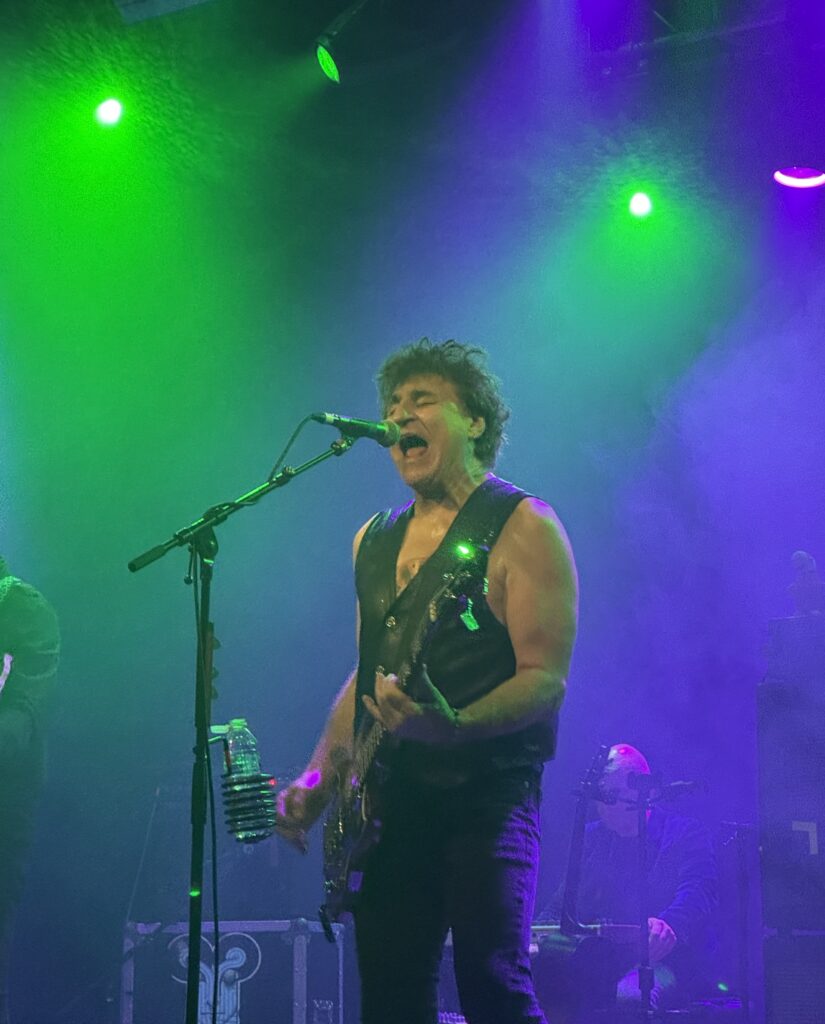
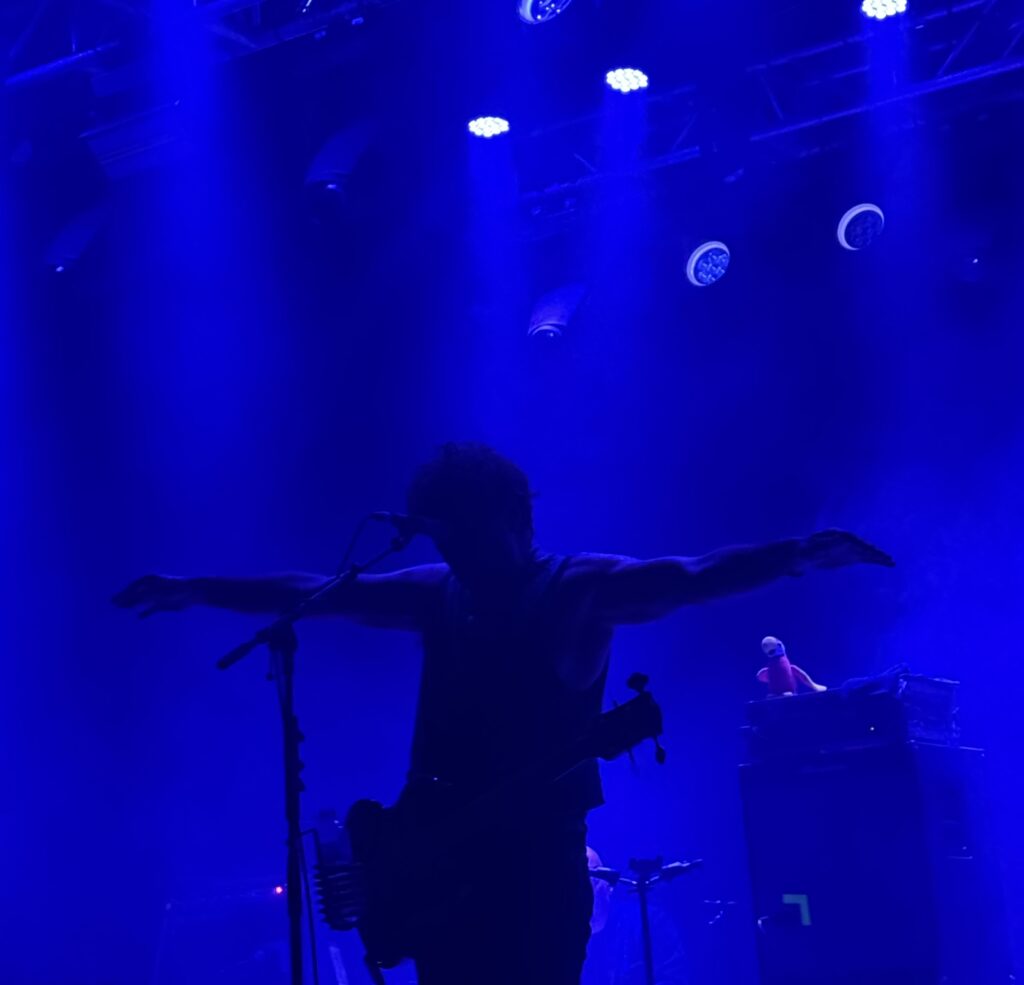
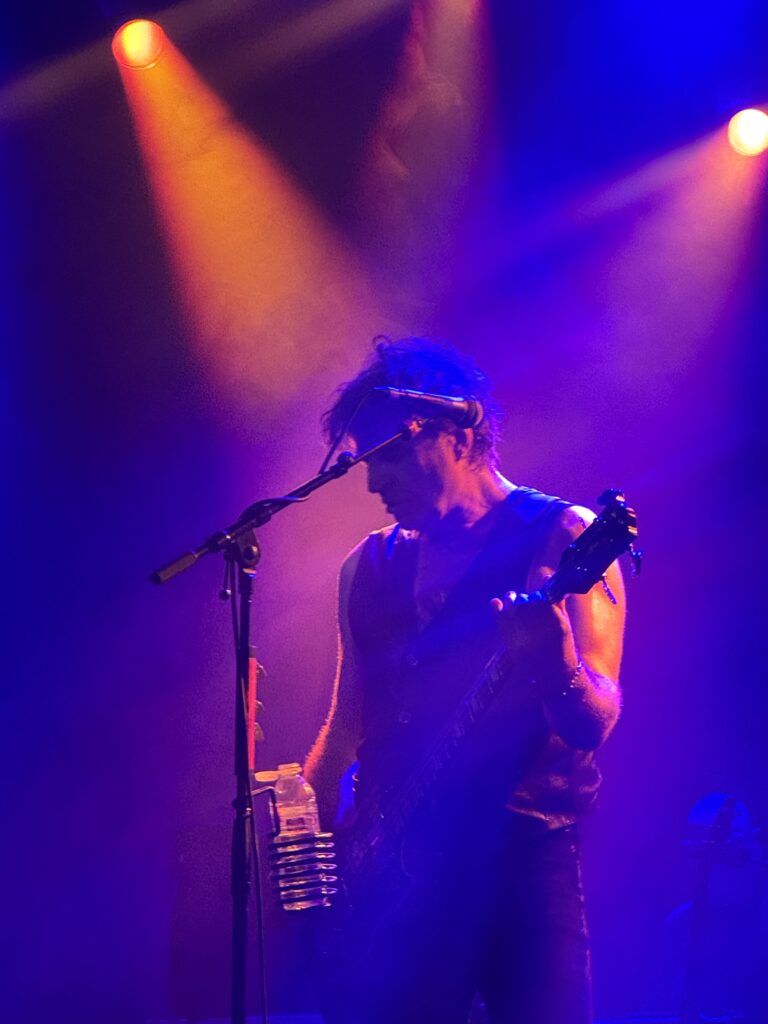
Photos by Chiara Rosati C.