



 Star in the Making #7: Rifka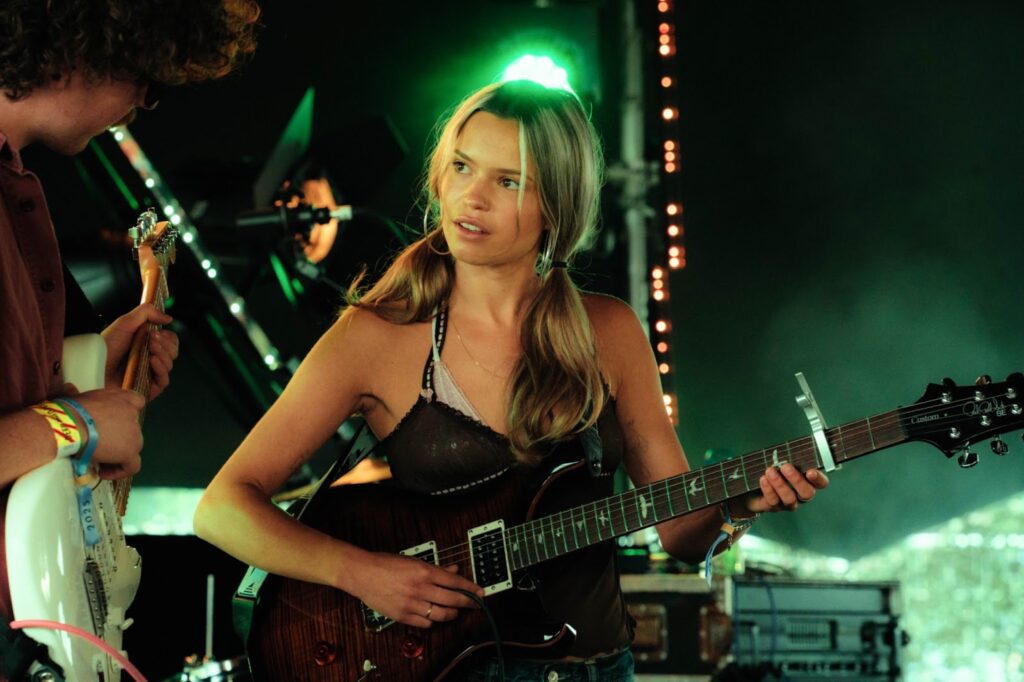
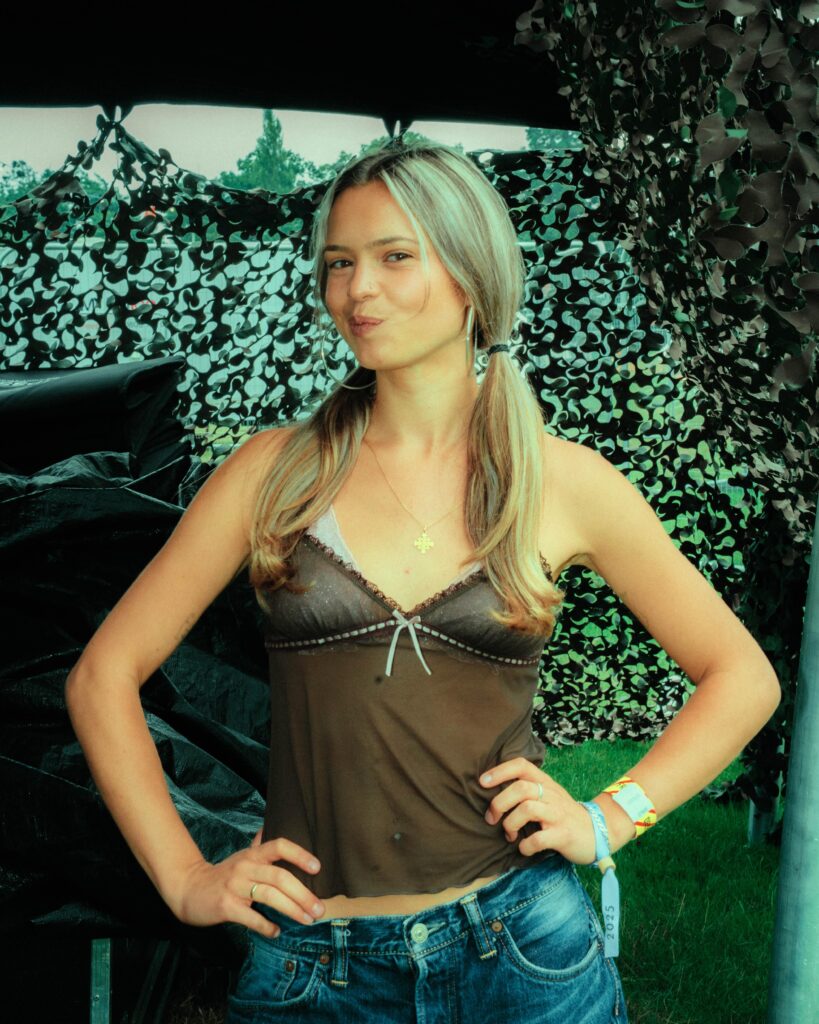
‘You don’t know me, you don’t owe me anything, you didn’t need to come to this gig, and yet you did. I’ll always hold people like that close to my heart…’
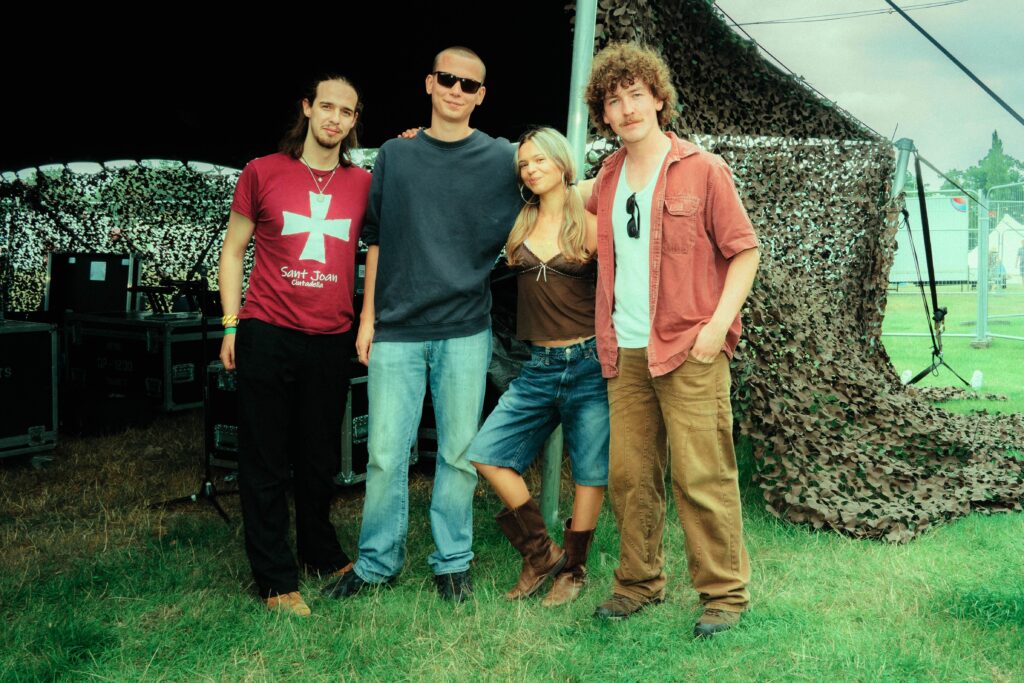
photos by @emiescamera
Cameron Whittaker: The first thing I like to ask about is your earliest music memory. Alternatively, do you have parents or family that influenced your music?
Rifka: Well, my dad’s musical, he plays guitar and he was in bands when I was growing up, so I was definitely surrounded by it. My mum also plays piano, but they’re quite different musically. I’d say she’s more technical – she could read music – whereas my dad couldn’t read music, and I’m kind of like him: he could just do it all by ear. I can’t really think of a specific earliest memory, but I do remember being in a crowd at a little festival in Wales, and my dad was playing on the same stage and day as Supergrass was. And I loved Supergrass. My dad’s band didn’t carry on unfortunately; but it was such a big thing for them at the time. I just remember being on my family friend’s shoulders and being like, “that’s my dad!” I guess that was probably my earliest memory of live music and being like, oh, okay, wow, this is amazing. But then in general, it’s just always been my dad playing guitar. We’ve always had like five guitars just all around the house, and we’ve had a piano for god knows how long.
CW: Did you learn guitar first? How old were you when you learned guitar?
R: I learned guitar when I was like 11 or 12, but it has never been avid. I’m not crazy good or anything like that, and I want to be better. Piano however, I’d say I’ve grown to be way more comfortable with and more experimental. I learned piano when I was much younger.
CW: Do you know I actually find that really surprising, I thought you were great on both [referencing her live shows]. But I actually thought you were going to say that guitar was your favourite, or that you were more proficient in it, because I thought technically that was really strong.
R: I felt that’s my one thing that I need to get better at. Because I’m not where I want to be with it and it’s just practising, isn’t it? But yeah, I’m not where I want to be with either of them. My main thing has always been the writing element, and my voice, so I think that has just taken the lead for what I do and practice on the day to day.
CW: Do you know, I was going to ask this later on, but just because you’re talking about it now, I always find it really interesting whether you’re taking any sort of musical courses – I know you did that at university – and whether you’re continuing it now. Do you take any lessons to supplement what you’re already doing? For example, you saying you want to be more proficient at guitar?
R: I’m not, I’d love to, I think that would be a really obvious way of getting stronger. I think it’s definitely something I’d like to do, but it’s just purely for money reasons right now. I was doing lessons at uni, like I got a bursary for it which I loved, and I really looked forward to it every week. Because so much goes on in life, when it comes to my time to do music, I don’t want to be just practising scales or whatever, I want to be writing. If I’m going to pay [for lessons], I’m gonna practice harder and get that bit better. But I do feel that performing live has really improved my playing. Standing up more, and just like getting into the flow of doing it, and not being able to make mistakes because you can’t do mistakes live. So I feel like that’s been a massive thing that’s helped me get stronger.
CW: I think that even though there are people who are technically gifted, especially with their specific instruments, if they’re not going to go up there on stage, and actually perform their own things, then… I don’t know, what’s the point?
R: The emotion and what you do with that is so important. So I totally get that.
CW: I want to talk about your creative process, I love hearing how artists make their art. If you’re in the early stages of writing a new song, are there spaces you go to be imaginative? Is there somewhere you go to sit down and write, or does it just come to you in moments of inspiration?
R: It’s definitely a mix, most of the time it’ll be because I feel like I need to let something out; a lot of the time it’s because I’ve been through something hard. That’s when I say – okay – I’m going to write a song now. I think otherwise, what’s the point in me feeling like this? I need to make something good out of the situation I’m in. So that’s when I’ll just go to my room, whether it’s at home or at uni [in Leeds], and just pick up my guitar or go to the piano. I always start with the chords or the melody on the instrument basically. Sometimes a few words or an idea will come to me, and I’ll write some lyrics down, but I pretty much always go for the instrument first. I can’t write lyrics properly without some chords or melody behind it, I don’t know how people could do that!
CW: It’s actually a debate, which comes first the beats or the bars? See, I think I would write my lyrics first. But so many people I’ve spoken to have said the same as you.
R: Yeah, totally. It can take a matter of seconds. It’s not like I need to come up with a whole song melodically, before putting lyrics and my voice on top. I just need to have the starting sequence, or a chord, or a picking pattern, or even a little [mimes playing the keys], boom on the piano. Then with the melody done, the lyrics just come, it’s always happened that way. Sometimes I’ll be out and I’ll think of some lyrics and I’ll write them down, but I can never organise them in a way that makes sense; that is until I have an instrument with me. I’ll just come up with something and then I’ll end up changing it – maybe it could be for a prechorus or something in the middle – but I always like to begin the process with some sort of chords or melody.
CW: So you feel quite strongly that your songwriting is a cathartic process. Would you say all your songs like that? Is it solely about working through your emotions and your feelings?
R: Absolutely. I think that’s like 90% of it. Sometimes though, it’s not necessarily working through some feelings I’m feeling in particular, it’s more just that I find it really satisfying, and I’ll feel really good about myself after I’ve written a song. So it’s not just, “oh, my God, I need to let this out,” some of the time I’m literally like, “okay I’ve got nothing that I’m doing, I’m not working, let’s try and write a song.” If I end up writing something I’m not that happy with, it’s really annoying, it’s like an itch. Whereas coming up with a verse or even a melody that’s actually really catchy is like, okay, I’ve sorted that for today, I’ll do the chorus another day. There’s such a sense of achievement and satisfaction of coming up with something I think is great; It’s what I live for really. I feel when there’s been a few weeks or months where I haven’t come up with something, I just don’t feel good. I feel like there’s something missing and I’m waiting for that next… [pausing for a moment]. It’s like an addiction really! But it’s obviously a good thing. Sometimes, I’ll be going through something, but I don’t have the strength to even start, I know if I did though I would feel much better.
CW: So you’ve finished university, you’re living back home. Are you working at the moment?
R: Yeah, working in hospitality.
CW: Barista by day, artist by night? Talk to me about the technical side of it, are you the one sitting on Ableton or Logic and doing the producing? Or have you got someone that you trust that does that for you?
R: Well, I’ve gone through so many different processes. I’m definitely not a producer, but uni has definitely taught me the simple way to use Ableton. I mean, I’ve always been good at harmonies, even just bringing it to life with harmonies and double vocals really puts it together. But also just being able to know how to use it in its basic form is really helpful. In year one and two, there was production involved, but it’s something that I’m not necessarily interested in properly. I feel like we’re in an age where a lot of people are songwriter/producers, and that’s great, but there are also lots of producers out there, and you don’t need to do both. I think it’s great they did it on the course, and I learned what I needed to learn from it, but it’s definitely not my thing. I want to be with the producer, but I don’t necessarily feel like I need to be doing it myself. I worked with a producer when I was quite young for the majority of songs that I’ve got out; his background is very much world music, natural type instruments, not electronic really. He did it all himself, he wasn’t sampling anything, he literally played every instrument. That was a great experience, and I would work with him again, but we come from very different worlds.
CW: Are you thinking that you want to use more electronica in your music?
R: I think no [pausing], I just want it to feel more bandy! Like not too bandy, but I want to feel there’s real drums. I loved the varied instrumentation, and the songs are great – it’s so important to work with different people from different backgrounds. But now I want to go for more of a Radiohead like sound, where it just feels like it’s about being in a room with some extra things on top.
CW: Would you say Radiohead has been your biggest influence?
R: I know it’s very cliche, but Radiohead and The Beatles have always been my two biggest inspirations. I know they’re different, but they’ve both fed into my writing so much. I feel this not necessarily in a dark way, but Radiohead, I’m just really inspired by them. I think their sound, which feels like it could have just been played in a room, is not too hectic, there’s not too much going on necessarily, It’s just incredibly emotive.
CW: Radiohead do use a lot of electronica though, but the caveat is they definitely care a lot about being able to recreate that sound live. There’s nothing in their discography that they couldn’t play as a band at their live shows.
R: That’s kind of it. It’s hard to describe because obviously you can do loads of things live, but I wanted my live set, and my songs, to be one and the same. I think the main thing is that I just don’t want anything to take away from my voice. Sometimes you’ll work with people that want to do too much – that doesn’t mean anything bad on them – but it’s more I don’t want too much to be taken away from what I’m trying to say. The most important thing is my lyrics, and my voice, and how it makes people feel. So production wise, I think I’m definitely going for more of a stripped back band experience. I remember meeting someone on the second day of uni that understood what I was trying to do, and I’m still really good friends with them; he does all my stuff, and it’s so nice to have that person that actually knows what you want. You can say, oh, can you do that bit there, and that bit there, and they just understand what you mean? I think going to uni was so great for being exposed to all these different people. They all have come from different backgrounds and all have their different talents and stuff. But yeah, I’m not really part of the actual production, but I absolutely want to be there for the direction of it.
CW: The right producer who knows what you want can completely change your sound and direction. While you were talking about it, I was actually thinking of Chloe Slater. She was an independent artist playing in a different band, she started working with a producer in Manchester, and just exploded on TikTok… Segwaying now, as a musician, you have to be a jack of all trades. You do your own marketing, your own merch, your own social media; is that something that you enjoy doing building up to a release, or do you hate social media with a passion?
R: I think a bit of both in the sense that it’s actually amazing we have that. If one of your songs, not necessarily blows up, but gets seen on TikTok, then one of the labels will reach out to you and you’ll get signed – unless it’s a one hit wonder type thing. But I think if you’re a really dedicated great musician, it won’t be that. It’ll just be a way of you being able to be seen, and noticed. Yet, it’s also so overwhelming, especially TikTok, because you have to post several times a day if you want to get into some sort of algorithm. You have to have a niche, but all your videos have to have a common thread. You need to do your thing, have a look physically, and the videos need to sound good. But even with these good quality videos it’s really tough. I’ve gone through phases where I’m like okay, I’m going to do it now, and I’ll do it solidly for a few months, and then I’m just like: I actually can’t anymore! It’s just one of those things that is really important, and you do just have to nail it down and be consistent, and this feels kind of promising in a way. If I actually worked really hard on my look, the background in which I’m filming the TikToks, and doing the same length videos, I guess anyone can do it really. There’s a nice element to that I feel. On the other hand, it’s just video, after video, after video, and it does get really hard. So the TikTok element I do find difficult, I need my life to be a bit more steady because it’s been such a whirlwind few months. I just need to fill that into my routine. But Instagram, I kind of enjoy that.
CW: You have quite an optimistic view, the last few interviews I’ve done, artists were like, “I fucking hate TikTok with a passion it’s horrible.” So actually it’s quite refreshing to hear you say that actually, if you have the talent, and or the time, that anything’s possible.
R: Yeah I guess so. It just makes you think, all these people on TikTok weren’t famous, and now suddenly they are. I mean, you’re going to annoy people, you’re gonna be on people’s ‘for you’ page; you’re going to be really annoying. Something I find irritating is that, if I did a way more mainstream pop lyric, or did something really weird in public, I’d get more views. But I don’t want to compromise myself, and change who I am. I’m going to go for the slow approach. I guess it’s optimistic as anyone can do it, and it feels like a platform for everyone if you keep going; in a sense it’s silly that I’m not posting right now, but like other people have said sometimes I do hate it. You see other people and you’re like, how did their video get that many views? It’s in such a weird background, and they’ve just got out of the shower. In my video, I think I look all right, and I’m in a cool background, and the song’s good, and I got 10 views. It does really grind on you, and it’s like, how is this fair? But yeah, I guess it’s just dedication on that one, which you need the time for. When you’re working a different job, and you’ve got stuff going on at home, it does get tricky to fit it in. There’s pro’s and con’s to TikTok, I would like to have some social media/marketing person, I think because it’s there and it’s so readily available, you’ve got to do as much as you can.
CW: Do you have a moment of pure ridiculousness, or something that was just surreal, that you would be willing to share from the last few gigs you’ve played?
R: Okay well, I don’t feel I have one specific thing that was like, oh my God, that’s crazy. But I obviously played Deer Shed [festival], where you were recently, and then the week before I had a headline show. In answer to your question – and this is more of like a cute thing – I’m such a small artist and I’ve so much more to come, but there was a moment in my headline, where I just looked out at all the people, and it was sold out. It was a small venue, but I still sold it out, which was just nuts for me. I was looking at all these people, some I knew, some I didn’t, and so many of them were singing the lyrics to my songs. A few people had found me on TikTok, bearing in mind I have like 1,000 followers, and come to my gigs that way. One time these two girls that had come all the way from London, and they got an Airbnb just to see me play. I could not fathom that; that I was looking at someone that’s travelled down from somewhere to come see me. I’m like, no one knows who I am! They were singing the lyrics all the way through the songs I was playing. That was a crazy moment for me, because I’m still such a small artist. I’ve played two festivals, had two headlines, and done some pub gigs, I’m nothing crazy, so that just really hit home in a good way. It means so much, even if it’s just one person. It’s like, you don’t know me, you don’t owe me anything, you didn’t need to come to this gig, and yet you did. I’ll always hold people like that close to my heart, and I’ll never forget those certain people.
CW: If you were talking to someone sitting on the fence about releasing their music, what would you say to make them take the leap, and put themselves out there?
R: I think it’s so scary at the beginning, to just do an Instagram post and be like, “I’ve got a single coming out,” cause so many people from school or college are all going to send it to their friends. There’s something so daunting about that, even if there’s only like a thousand people following you. You’re about to put something out that you’ve made, and worked on, and that means so much to you. But once you’ve released one song, and got into the flow of the social media thing, it does get easier. I’m no professional, but I’ve got used to my account being my music. It’s not just my Instagram account anymore, It’s my artist page. I think once you get into that, it’s not so scary, because I’ve started doing this now, people know what I’m about; people are messaging me saying this [release] is great. I’ll see people that I haven’t seen for ages, and they’re like, “your music, you’re doing so well.” People begin to associate that with you and it feels so rewarding. Even if it’s just a few people that say your music has helped them in some way – even if it’s just that they got ready to the song or something – it’s such a nice feeling. All these random people that don’t need to say anything to me saying, “I listened to this earlier on the train, and oh my god I’ve added it to this playlist.” I mean that in itself is amazing. It’s hard to take that leap, but like, fuck it, just release the song, and see how it goes. If you’ve put your love and hard work into it, then someone is going to appreciate it. Even just one person is enough at the beginning to validate you. I’m no guru, but just fucking just do it, It’s so special to share with people. Obviously there’s people out there that just want to write in their bedroom; they don’t actually want to do it as a career. But if it’s something you want to do, and some people are saying, “what are you actually going to do? What’s your job actually going to be?” Sod them, work really hard on one song, then just release it and just see what happens.
CW: I think what you said about it being a daunting process, there are always going to be people that look inside themselves and there’s nothing there, and they’re the type of people to hate seeing others do well. But they’re so irrelevant in the wider scheme of things. If you get positive feedback from people you love, and who inspire you, then who cares? There’s so much more good than bad.
R: Absolutely, I can’t think of anything bad, unless you’re going to start getting hate comments when you release a song, and I hope that doesn’t happen! You’re just gonna get people that say, “Wow this is great, and this made me feel like this.” It’s just that one person saying something nice, which is a pro in itself. There’s literally nothing that can go wrong, there’s no cons to any of it really.
Rifka’s next live performance is supporting Mick Flannery and Susan O’Neill at the Kamera Ballroom Manchester – on the 6th December.